
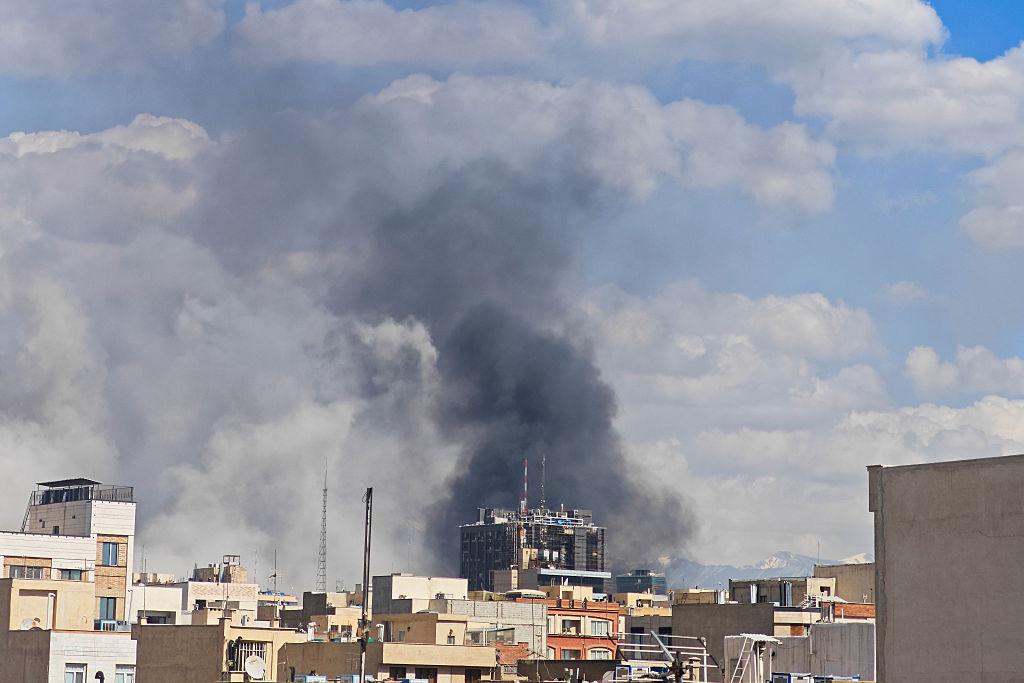
What happened?
The United States and Israel conducted multiple military strikes inside Iranian territory, targeting military installations and nuclear facilities. Iran responded with waves of ballistic missiles and drones aimed at military and strategic sites across several Gulf states. The conflict has shifted from proxy warfare to a near-direct confrontation between states possessing advanced destructive capabilities.
Context
The U.S.-Iranian confrontation has deep roots stretching back to the 1979 Islamic Revolution, but the current inflection point follows the collapse of renewed nuclear diplomacy. Israel has never concealed its opposition to any nuclear deal that leaves Iran on the threshold of weapons-grade capacity, and has acted unilaterally on multiple occasions to strike Iranian nuclear infrastructure. What is fundamentally new this time is the transition from covert operations and targeted assassinations to declared military strikes with unmistakable strategic intent.
Military Dimension: Unpacking the Battlefield
U.S.-Israeli strikes first neutralized Iranian air defense systems before moving to nuclear facilities and Islamic Revolutionary Guard Corps command centers — a sequencing that reveals a clear operational doctrine: disable the capacity to respond before delivering the primary blow. Iran, in turn, activated its regional proxy network — Hezbollah in Lebanon, armed factions in Iraq and Syria, and the Houthis in Yemen — to distribute the response and exhaust Gulf and American missile defense systems. Reports indicate large-scale use of kamikaze drones as a tactic to deplete costly interceptor stockpiles. The greatest near-term risk is an uncontrolled escalation: a strike hitting civilians or a major oil installation could fundamentally redraw rules of engagement.
Humanitarian & Economic Dimension
Ordinary Iranians are living through a crushing economic crisis compounded by decades of sanctions and now active conflict. Inflation has reached historic levels and the currency has lost a significant portion of its value. Any further military escalation will deepen this economic collapse and intensify civilian suffering. Gulf communities near U.S. military bases are experiencing genuine security anxiety, with reports of families relocating and economic activity suspending in certain areas. At a broader level, the energy price surge generated by this conflict will feed directly into global food and transport costs, hitting the most vulnerable populations in Africa and Asia first.
Diplomatic & International Dimension
Russia and China have publicly condemned the strikes as a clear violation of international law, but have not taken practical steps beyond verbal denunciation. Europe is divided: several states have expressed ‘grave concern’ while offering tacit support for the U.S.-Israeli position on the nuclear file. Gulf states find themselves in an acutely sensitive position — they are the actual targets of Iranian missiles, yet they fear their territories becoming an open theater of war. Turkey is watching with extreme caution and remains best-positioned to play a mediation role if one is sought. The UN Security Council remains paralyzed by chronic Russian-Chinese vetoes.
Implications for Africa
Africa appears distant from this equation, but the interconnection runs deeper than it seems. African oil-importing nations — the vast majority of the continent — will absorb the energy price shock directly, compounding inflation and squeezing government budgets. International aid and development financing will shift toward Middle East security priorities at the expense of Africa’s development agenda. And African countries that depend on Gulf remittance flows will feel the impact of contracting Gulf economies and declining migrant transfers.
30–90 Day Assessment
- Most likely: Continued limited strikes with calculated restraint from both sides to avoid sliding into full-scale war.
- Moderate probability: A large-scale Iranian attack targeting Gulf oil infrastructure driven by rising domestic pressure.
- Low but non-negligible probability: Escalation drawing U.S. forces into direct land or naval combat with Iran.
Early Warning Indicators
- Any direct attack on tankers in the Strait of Hormuz or the Arabian Gulf
- Sudden spike in maritime and aviation insurance premiums
- Additional U.S. naval assets deployed to the region
- Iranian leadership statements signaling a shift in nuclear response doctrine