
What happened?
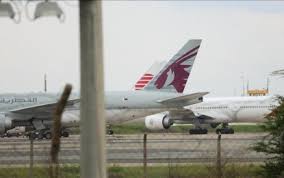
Widespread closure of airspace over Iran, Iraq, and parts of the Gulf triggered the cancellation of thousands of flights and paralyzed major transit hubs in Dubai, Doha, and Abu Dhabi. The impact spread immediately to airports across East and Southern Africa, exposing the extent to which an entire continent depends on aerial corridors that can be shut by military decisions it has no voice in.
Context
Gulf aviation centers — Dubai, Qatar, and Riyadh — handle more than 300 million passengers annually and serve as the primary transit bridge between three continents. Africa is almost entirely dependent on this corridor: more than 70% of international flights to and from African capitals pass through Gulf airports. This aerial dependency is the legacy of decades of weak infrastructure and insufficient direct international air links from African cities to the rest of the world.
Military & Security Dimension
The airspace closure is not merely a precautionary measure — it is an expression of the breakdown of civil aviation security in the face of war logic. Ballistic missiles and drones make no distinction between military and civilian airspace. A passenger aircraft intercepted by mistake or struck by shrapnel would constitute a simultaneous humanitarian and diplomatic catastrophe. Pressure on Iran and coalition forces to define ‘safe corridors’ will be at the center of security negotiations in the days ahead.
Humanitarian & Economic Dimension
African airlines face immediate and compounding losses: flight cancellations mean unrecoverable revenue, and route diversions mean soaring operational costs. The tourism sector in Kenya, Tanzania, Ethiopia, and South Africa — still recovering from the COVID pandemic — will absorb a severe blow if closures persist. The hardest hit are East and Southern African migrant workers returning to or departing from the Gulf, who may find themselves stranded while families back home wait on their remittances.
Diplomatic Dimension
The International Civil Aviation Organization (ICAO) has issued warnings but lacks enforcement tools in conflict zones. African states find themselves spectators to a decision that profoundly affects them, without a seat at the table where it was made. The African Union has yet to issue a unified, clear position.
30–90 Day Assessment
- Partial reopening of airspace with continued restrictions in specific zones
- Global air freight costs rising by an estimated 20–40%
- Mounting pressure on smaller African carriers toward financial insolvency
Early Warning Indicators
- Any incident involving a civilian aircraft in the conflict zone
- Insurance companies raising aviation coverage premiums
- Major carriers announcing open-ended suspension of regional routes