
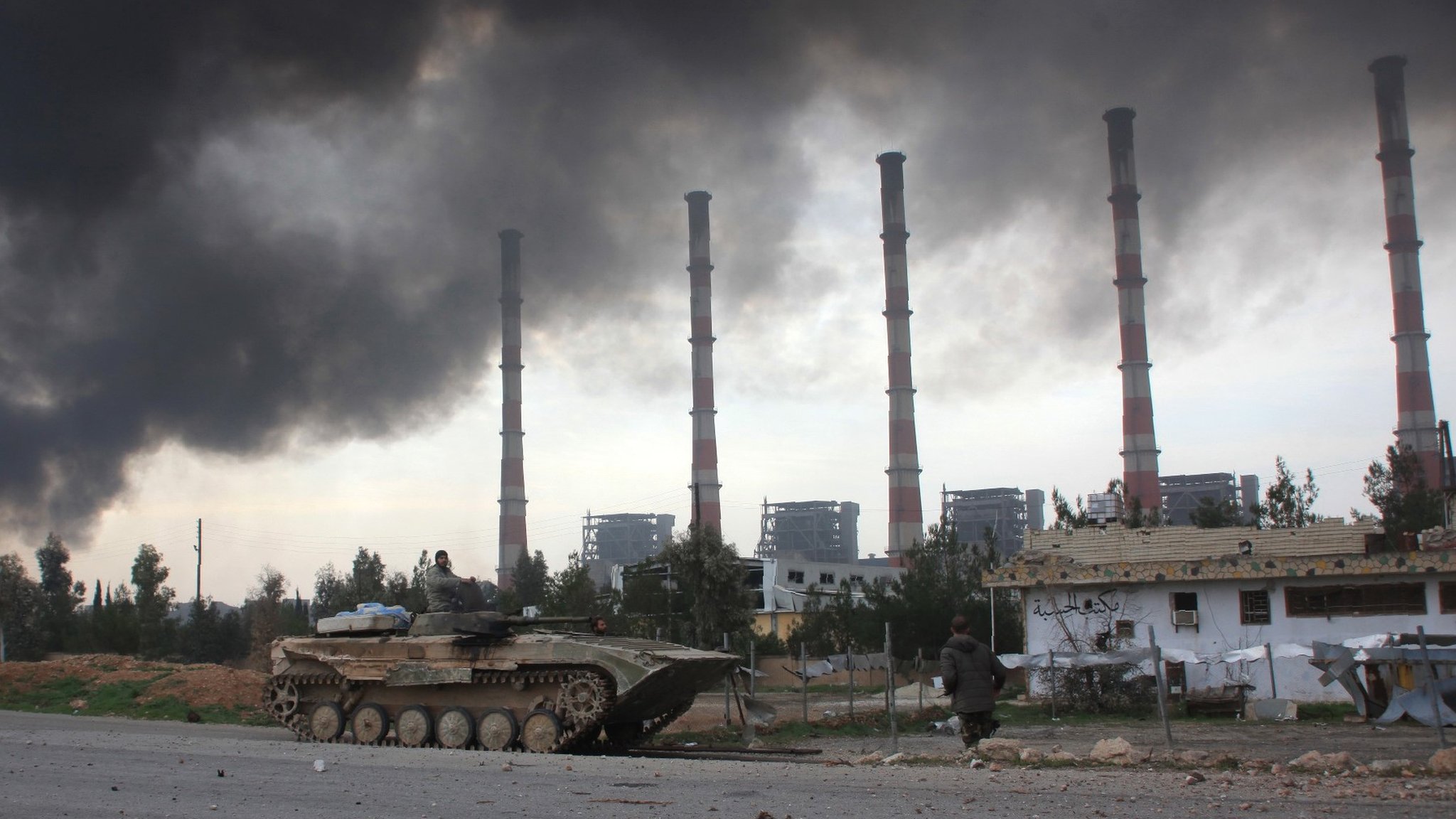
Strategic Summary
Syria’s energy sector is not just an economic story — it is the arena where regional and global powers are quietly competing to shape post-war Syria. Understanding this file means understanding who will actually hold the keys to power in Damascus in the years ahead.
I. Geography as a Weapon — Syria’s Energy Position
Syria does not have massive oil reserves by regional standards, but it has something more valuable right now: location. It sits at the crossroads of four strategic energy corridors:
The first connects northern Iraq’s oil fields to Mediterranean ports — the Kirkuk-Baniyas pipeline running through Syrian territory, which offers an alternative to Gulf shipping routes vulnerable to Hormuz and Red Sea disruptions. The second is the Arab Gas Pipeline stretching from Egypt through Jordan and Syria toward Lebanon and Turkey — a corridor that was supposed to make Syria a regional energy hub. The third is the oil fields in northeastern Syria themselves, representing the most immediate and fastest exploitable wealth. The fourth — and most strategically significant in the long run — is Syria’s potential role as an alternative corridor for Gulf energy toward the Mediterranean. As disruptions in the Strait of Hormuz and the Red Sea intensify, there is a growing need for alternative land and sea routes to deliver Gulf oil and gas to European markets. Syria, sitting between the Gulf and the Mediterranean, is the missing geographical link in this equation. If this role materializes, Syria transforms from a small producer into a major transit state — multiplying its strategic value far beyond the size of its own reserves.
All four corridors are currently broken, incomplete, or running in the wrong direction. That alone tells us something important: the structural challenges are enormous, but so is the potential upside if these corridors are restored.
II. The Arab Gas Pipeline — A Story of Strategic Reversal
The Arab Gas Pipeline was once an ambitious regional vision: pumping gas from Egypt northward through Jordan and Syria to Lebanon, Turkey, and eventually Europe. But Israel’s emergence as a gas exporter — following major Mediterranean basin discoveries — flipped the entire equation.
The pipeline that was supposed to cement Syria’s central role in regional energy now moves Israeli gas to Jordan in the opposite direction. Syria dropped out of this equation entirely — neither as a beneficiary nor as a transit point. This shift was not the result of a Syrian political decision. It was the cumulative outcome of wars, sanctions, and a fundamentally changed regional energy map.
The lesson is clear: Syria cannot reclaim its pivotal energy role through domestic reform alone. It needs to completely redraw its regional partnerships.
III. Northeastern Syria — The Booby-Trapped Treasure
The oil fields in northeastern Syria are simultaneously the most urgent and most complicated asset on the table. In terms of potential, production can grow significantly in the short term if the right investments and technology are brought in. In terms of complexity, these fields sit in a region where actual sovereignty has not yet been settled — governance arrangements between Damascus and local forces are still being negotiated.
On top of that, the security infrastructure needed to protect oil operations in this area is being built from scratch. This is not just a logistical obstacle. It means that any foreign investment requires an external security guarantor — which makes foreign companies dependent on political balances rather than the economic merits of the project alone.
IV. Russian Oil and Iran — The Hidden Network
The most concerning aspect of Syria’s energy picture is not what is said publicly — it is what the movement of oil tankers reveals. Russia has become Syria’s primary crude oil supplier, but the catch is that some of these tankers are under US Treasury sanctions because of their ties to Iran.
This means the parallel networks that sustained the previous Syrian government have not collapsed — they have simply repositioned themselves inside the new economy, specifically through the energy sector’s back door. Post-war Syria may not just be importing oil. It may be importing the same dependency relationships that weighed it down for the past decade, just under new labels.
This is the core structural contradiction: while Washington encourages its companies to enter the Syrian market, the supply chains feeding that market today run through networks that Washington itself has sanctioned. A company investing in Syria now could find itself operating in an energy environment deeply entangled with Iranian-Russian networks whose full shape has not yet emerged.
V. Who Wins and Who Loses
Potential short-term winners: Foreign companies that enter early will secure preferential contracts and strategic partnerships. Damascus gets the revenues it needs for reconstruction and international legitimacy backed by real economic interests. Washington cements influence in a country that was outside its orbit for decades. Gulf states may find in Syria an alternative corridor that reduces their dependence on shipping routes exposed to Hormuz and Red Sea disruptions — though the Gulf’s notable absence from public discussions about rebuilding the sector suggests this file is still being negotiated behind closed doors.
Potential losers: Russia and Iran, which invested heavily in Syria throughout the war years, now face direct Western economic competition — but they will not surrender easily, as evidenced by Russian oil tankers still docking at Syrian ports today. Local communities in production areas remain the weakest link if fair revenue-sharing mechanisms are not put in place.
VI. The Three Scenarios
Scenario One — Successful Integration: Damascus attracts Western investment, consolidates security in the northeast, and builds a relatively independent energy system. Syria becomes a real corridor for Gulf energy toward the Mediterranean, transforming from a marginal producer into a strategic transit state. Energy becomes fuel for reconstruction and a foundation for international legitimacy. This scenario requires resolving internal political integration first.
Scenario Two — Dependency Repackaged: Russian-Iranian networks penetrate the energy sector deeply enough that Syria is formally in the Western partnership camp but effectively inside the opposing sphere of influence. Energy becomes a tool for reproducing old dependency under new names.
Scenario Three — Contested Ground: Oil fields and pipelines become bargaining chips in great power competition, with Syria as a participant but not the decision-maker. Energy becomes a source of tension rather than stability, and Syria’s potential role as a Gulf corridor remains on paper only.
Conclusion
Syria is at a rare moment: exploitable energy wealth, unprecedented international openness, and a geographic position that — if leveraged wisely — could place it at the heart of the region’s energy network rather than its margins. But this moment is surrounded by three structural risks that cannot be ignored: fragile sovereignty over production areas, the persistence of parallel networks inside the energy sector, and the absence of the regional infrastructure needed for real integration.
The real test is not how fast Syria attracts investment. It is whether Syria can build an energy system that serves Syria first — making it a partner rather than a dependency, whether toward the West, the Gulf, or any regional power seeking to exploit its geography for their own ends.