
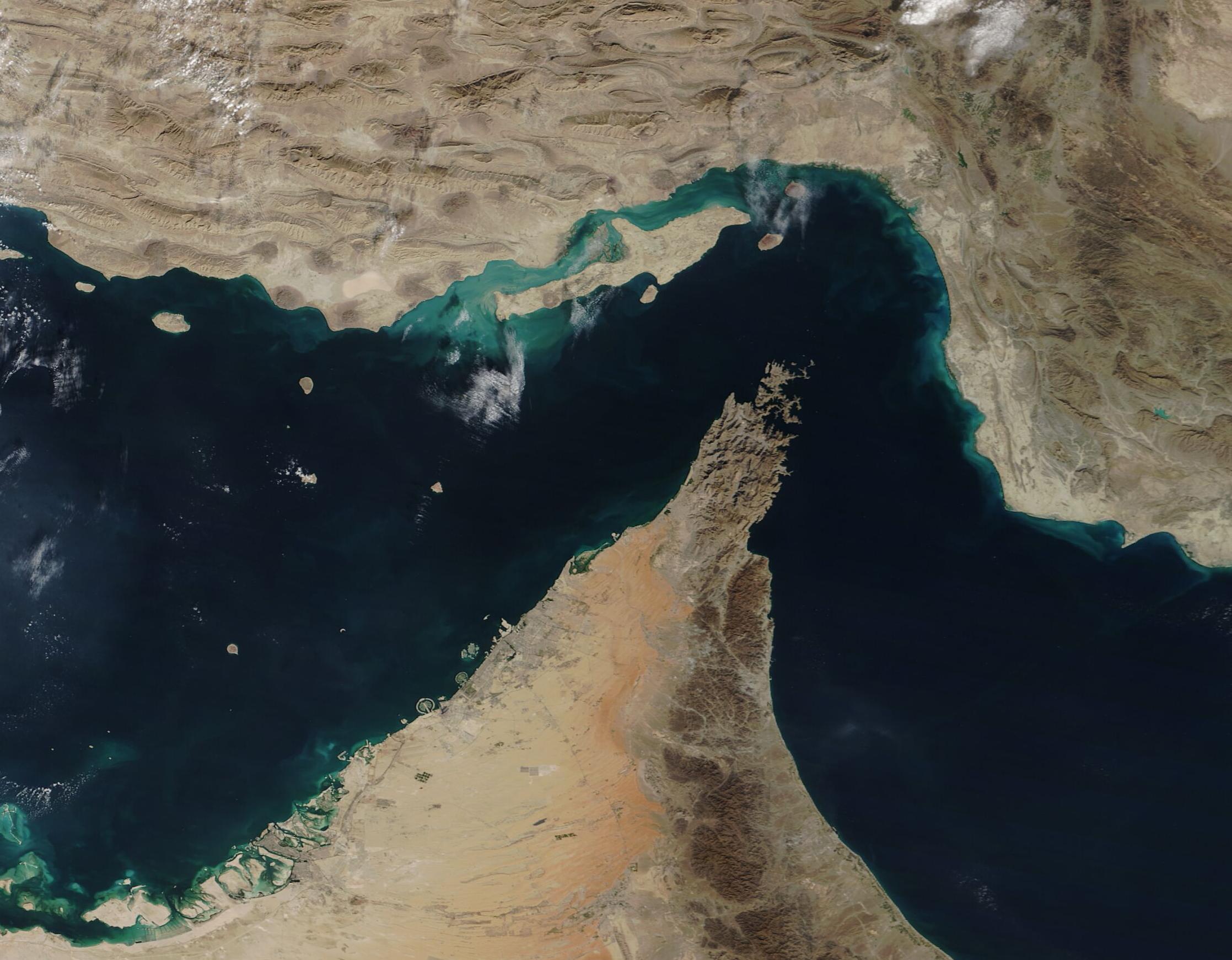
The Gulf Cooperation Council (GCC) states entered the Iran-related conflict from a stronger financial position than many observers expected. Prior to the escalation, International Monetary Fund projections indicated that most Gulf economies were on track for stable growth, ranging from roughly 2.5 percent in Kuwait to 4.4 percent in the United Arab Emirates, with fiscal surpluses in some countries and near balance in others such as Qatar and Oman. This financial starting point provided Gulf governments with an initial buffer to absorb the shock. However, it does not eliminate the structural risks that could emerge if the conflict becomes prolonged—especially with disruptions affecting one of the world’s most critical economic arteries: the Strait of Hormuz.
The Strait of Hormuz: The Center of the Economic Crisis, Not the Battlefield
Despite the military nature of the conflict, the most serious economic impact stems from disruptions to navigation through the Strait of Hormuz. The closure simultaneously affects energy exports, constrains food imports, and raises shipping costs across the region. It quickly became clear that countries physically located inside the Strait—Qatar, Kuwait, and Bahrain—are the most exposed to logistical pressure, while Saudi Arabia and the UAE retain relatively greater flexibility through alternative pipeline routes and export corridors.
Yet the impact extends far beyond the Gulf itself. Countries as distant as the Philippines have already begun fuel rationing and shifting to remote work, illustrating how the crisis has evolved from a regional conflict into a global supply shock. If disruptions persist, Gulf governments will be forced to invest billions of dollars in new pipelines, overland trade routes, and alternative supply chains—changes that could reshape the region’s commercial geography for decades.
Fiscal Policy Becomes the First Line of Economic Defense
Because Gulf currencies remain pegged to the U.S. dollar, central banks have very limited room to deploy conventional monetary policy tools. As a result, the burden of stabilization has shifted to fiscal policy. Governments are relying increasingly on public spending, loan guarantees for businesses, relaxed banking requirements, and targeted financial support for the most affected sectors.
Although Gulf banking systems remain stable, the greatest risk does not lie in an immediate financial collapse. Rather, it stems from the possibility that prolonged disruptions in energy and food supply could generate broader global economic consequences. Small and medium-sized enterprises are already facing mounting pressure from rising costs, liquidity constraints, and delayed investment decisions—factors that could slow regional growth if they persist.
At the same time, governments have begun reprioritizing expenditures, shifting attention toward defense procurement and security reinforcement, while temporarily postponing major development projects without canceling them altogether. However, if the conflict continues beyond April, maintaining this balance may become significantly more difficult, particularly for more financially vulnerable economies such as Bahrain.
Reshaping Gulf Economic Partnerships Under the Pressure of War
One of the deeper consequences of the crisis is the potential restructuring of the Gulf’s trade network. Maritime disruptions are gradually encouraging greater reliance on overland transport corridors and alternative pipeline infrastructure, increasing the strategic importance of countries such as Iraq, Turkey, Jordan, and Egypt as future logistical and commercial partners. The crisis is also prompting Gulf governments to reconsider export destinations and import sources in ways that may persist well beyond the end of the conflict.
At the same time, foreign labor remains a critical yet often overlooked pillar of economic stability across the Gulf. While domestic political conditions remain stable for now, prolonged tensions could trigger gradual outward migration among expatriate workers, with direct implications for construction activity, labor markets, domestic consumption, and the implementation of large-scale development projects.
Ultimately, Gulf economies are not facing an immediate financial breakdown. Instead, they are confronting a serious test of their ability to manage a prolonged crisis within an unstable regional environment. If the conflict remains short-lived, the region may repeat the rapid recovery pattern seen after the COVID-19 pandemic. But if disruptions to the Strait of Hormuz persist, the Gulf could enter a deeper phase of economic restructuring that reshapes trade routes, investment priorities, and regional economic integration for years to come.