
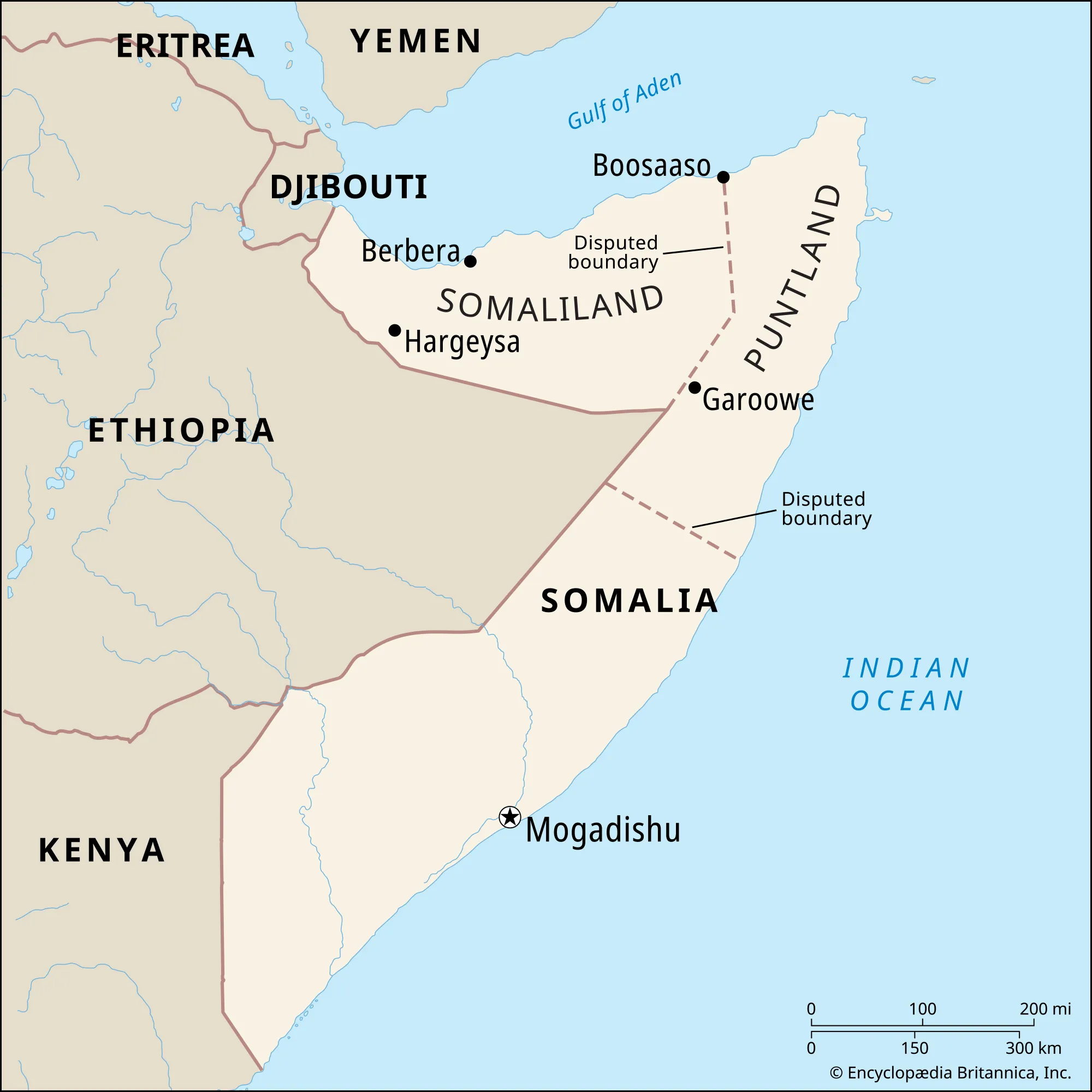
The deeper story in the Somalia file does not begin this week. It begins on December 25th, when Benjamin Netanyahu announced that Israel had become the first country in the world to formally recognize the Republic of Somaliland as an independent sovereign state, describing the move as being “in the spirit of the Abraham Accords.” Somaliland, the northern breakaway region that declared independence in 1991, holds a strategically rare position on the Gulf of Aden at the precise junction of the Red Sea and the Bab el-Mandeb strait — a corridor through which more than ten percent of global maritime trade passes. For Israel, currently at war with Iran — which backs the Houthis disrupting navigation in the Red Sea — this location is not merely geography but a strategic leverage point and a potential launch platform for maritime surveillance and deterrence operations.
The reactions were furious and coordinated. Egypt, Turkey, Djibouti, and Somalia issued a joint statement condemning the move. The African Union saw it as “a dangerous precedent.” The Intergovernmental Authority on Development in East Africa described it as a clear violation of the UN Charter. The UN Security Council convened in an emergency session at Somalia’s request, with 14 of 15 members voting against the step while the United States alone defended it. Yemen’s Houthi movement declared that any Israeli presence in Somaliland would be “a military target” — a threat that links the Red Sea front to the Horn of Africa in a troubling equation.
The domestic context in Somalia deepens the complexity further. Mogadishu has not controlled Somaliland since 1991, but it refuses to accept international recognition of the region because doing so would threaten its territorial unity and legal sovereignty. Somali President Hassan Sheikh Mohamud described the move as “the gravest assault on Somalia’s sovereignty in its history” and named Israel an “enemy.” His prime minister warned that Somali territory would not be used as a base for regional wars. And while reports of ministerial dismissals in this context require additional confirmation, the domestic political pressure on the Somali federal government is reaching unprecedented levels. What gives this file particular strategic weight is a third, largely unspoken angle: multiple Western-sourced reports indicated that the United States is considering recognizing Somaliland, and that Trump said “everything is under study.” If Washington joins Israel’s recognition, the map of the Horn of Africa will be redrawn in ways that create a strategic counterweight to Turkey — which has built its influence through federal Somalia for years — and a counterweight to Iran, which holds cards through the Houthis in Yemen directly across the water. The competition for the Horn of Africa, which until recently was political and economic in nature, is today acquiring a military and geopolitical dimension of profound weight.