
The Event
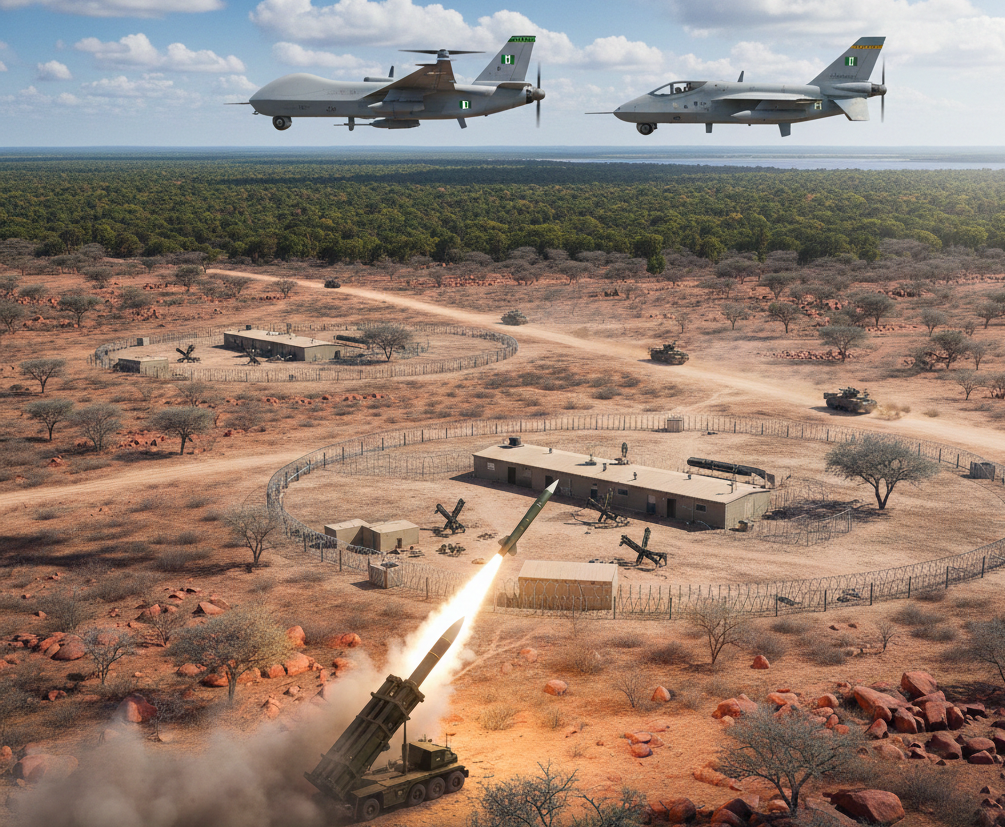
The Nigerian military conducted precision airstrikes targeting positions of the Islamic State in West Africa Province (ISWAP), resulting in the killing of more than 40 militants. This operation comes as part of a broader military campaign to restore government control over areas experiencing escalating activity by armed groups, particularly in the northeast around the Lake Chad Basin.
Historical and Regional Context
Roots of the Terrorist Threat
The Islamic State in West Africa Province represents one of the most dangerous regional branches of the Islamic State globally. The organization emerged in 2016 following a split within Boko Haram led by Abu Musab al-Barnawi, who pledged allegiance to the central ISIS organization. Since then, the group has controlled vast areas in Borno, Yobe, and northern Adamawa states, exploiting weak security infrastructure, extreme poverty, and social marginalization.
Regional Dynamics
These strikes are part of broader regional efforts including the Multinational Joint Task Force (MNJTF) comprising Nigeria, Niger, Chad, Cameroon, and Benin. The region faces interconnected security challenges:
- Porous borders: Nigerian borders with neighbors extend thousands of kilometers, most poorly controlled, facilitating movement of fighters and weapons
- Tribal overlap: Many tribes live on both sides of borders, complicating security efforts
- Humanitarian crisis: Over 2.7 million people displaced due to conflict, creating fertile ground for terrorist recruitment
Why Does This Development Matter?
Strategic Security Dimension
This military escalation represents a decisive response on several levels:
- Breaking organizational momentum: Strikes targeted vital positions, disrupting the organization’s ability to plan major operations and coordinate cross-border attacks
- Deterrent message: The operation sends a strong signal to armed groups that the Nigerian government has developed its intelligence and air capabilities, especially after years of criticism of its military performance
- Psychological impact: Successful strikes shake fighter morale and weaken the organization’s appeal to potential recruits
Economic Dimension
Terrorist operations affect:
- Agriculture: Disruption of farming season in northeastern Nigeria, the traditional breadbasket
- Regional trade: Closure of vital trade routes linking Nigeria with Niger and Chad
- Investment: Capital flight from violence-affected areas
Humanitarian Dimension
More than 35,000 people have been killed since the insurgency began in 2009, with millions more displaced and exposed to famine and sexual violence. Success of military operations opens opportunities for displaced persons’ return and reconstruction.
Potential Repercussions
Near Term
Disrupting imminent operations:
- Targeted sites were used as bases for weapons storage and attack planning
- Weakening ability to launch coordinated attacks against military bases and major cities
- Cutting supply lines between different cells
Impact on organizational network:
- Loss of experienced field commanders difficult to replace
- Disruption of financing mechanisms through ransom and taxes imposed on local populations
- Weakening ability to recruit new fighters
Tactical Level
Shift in terrorist strategy:
- Dispersion and spread: Organization may move toward breaking large structures into smaller, more flexible cells
- Integration into communities: Increased camouflage among civilian populations to avoid airstrikes
- Individual operations: Adopting “lone wolf” model instead of complex mass attacks
- Geographic transition: Potential movement of elements toward less monitored areas in northwestern Nigeria or neighboring countries
Technical adaptation:
- Wider use of improvised explosive devices instead of direct confrontations
- Intensification of nighttime operations to hide from drones
- Greater reliance on motorcycles for rapid movement
Strategic Level
Opportunity to break the vicious cycle:
If the government can capitalize on this military success, it could:
- Fill security vacuum with permanent government presence
- Launch development programs in liberated areas
- Strengthen regional intelligence cooperation
- Address root causes of extremism (poverty, unemployment, marginalization)
Risks of sustainability failure:
History is filled with examples of military “victories” that didn’t translate to lasting stability:
- Return of organizations in new forms after dormancy period
- Groups exploiting political and security vacuum
- Local resentment against military operations turning into support for insurgents
What Requires Follow-up?
Local Level
- Public reaction:
- Will local communities welcome the army’s return or view it with suspicion?
- Government readiness to provide basic services (health, education, security)
- Authorities’ ability to prevent army retaliation against civilians suspected of collaborating with terrorists
- Governance and services:
- Reconstruction plans for destroyed infrastructure
- Mechanisms for integrating former fighters into society
- Counter-extremism and rehabilitation programs
- Transparency and accountability:
- Publishing operation details to build public trust
- Investigating any potential human rights violations
- Monitoring use of military resources allocated for operations
Regional Level
- Security coordination:
- Effectiveness of upcoming joint task force meetings
- Intelligence sharing on militant movements across borders
- Coordinating military operations to prevent elements fleeing to neighboring countries
- Regional diplomacy:
- Chad’s position (which has seen recent decline in military commitment)
- Niger’s role (amid internal political transformations)
- Nigeria-Cameroon relations in managing shared borders
- Funding and support:
- Continued financial support from African Union and United Nations
- Gulf states’ role in financing counter-extremism programs
- Development partnerships for reconstructing liberated areas
International Level
- Western support:
- Continuation of American and European programs for training Nigerian forces
- Humanitarian assistance for displaced persons
- Evaluating effectiveness of current counter-terrorism programs
- Geopolitical competition:
- Growing Russian influence in West Africa (after Sahel coups)
- Chinese interests in regional stability
- Competition over resources and political influence
- International organizations:
- UN reports on humanitarian situation
- Human rights organizations’ positions on military operations
- World Bank assessments of reconstruction costs
Security Level
- Retaliation indicators:
- Monitoring activity on social media platforms linked to the organization
- Increased attacks on checkpoints and military convoys
- Targeting civilians in major cities (Abuja, Kano, Maiduguri)
- Intensified kidnappings for ransom and funding
- Tactical movements:
- Monitoring element repositioning in new areas
- Emergence of alternative training camps
- New attack patterns reflecting change in leadership or strategy
- Dangerous alliances:
- Potential rapprochement between “ISIS West Africa” and “Boko Haram” (despite historical split)
- Links with terrorist groups in Sahel region (Al-Qaeda in the Islamic Maghreb)
- Infiltration of foreign elements from other conflict zones
Recent airstrikes represent important tactical success, but the fundamental question remains: Will the Nigerian government be able to convert this temporary military success into lasting strategic gains?
This requires:
- Political will to address corruption and mismanagement within military institution
- Massive financial resources for reconstruction and development
- Effective regional partnerships to secure border control
- Social programs to address roots of extremism
- Long-term vision transcending purely security solutions
Experience in other conflict zones (Iraq, Afghanistan, Somalia) proves that military victories alone are insufficient without building a state capable of providing security, services, and justice to its citizens. Nigeria faces a historic opportunity, but the window may not remain open long.