
Executive Summary
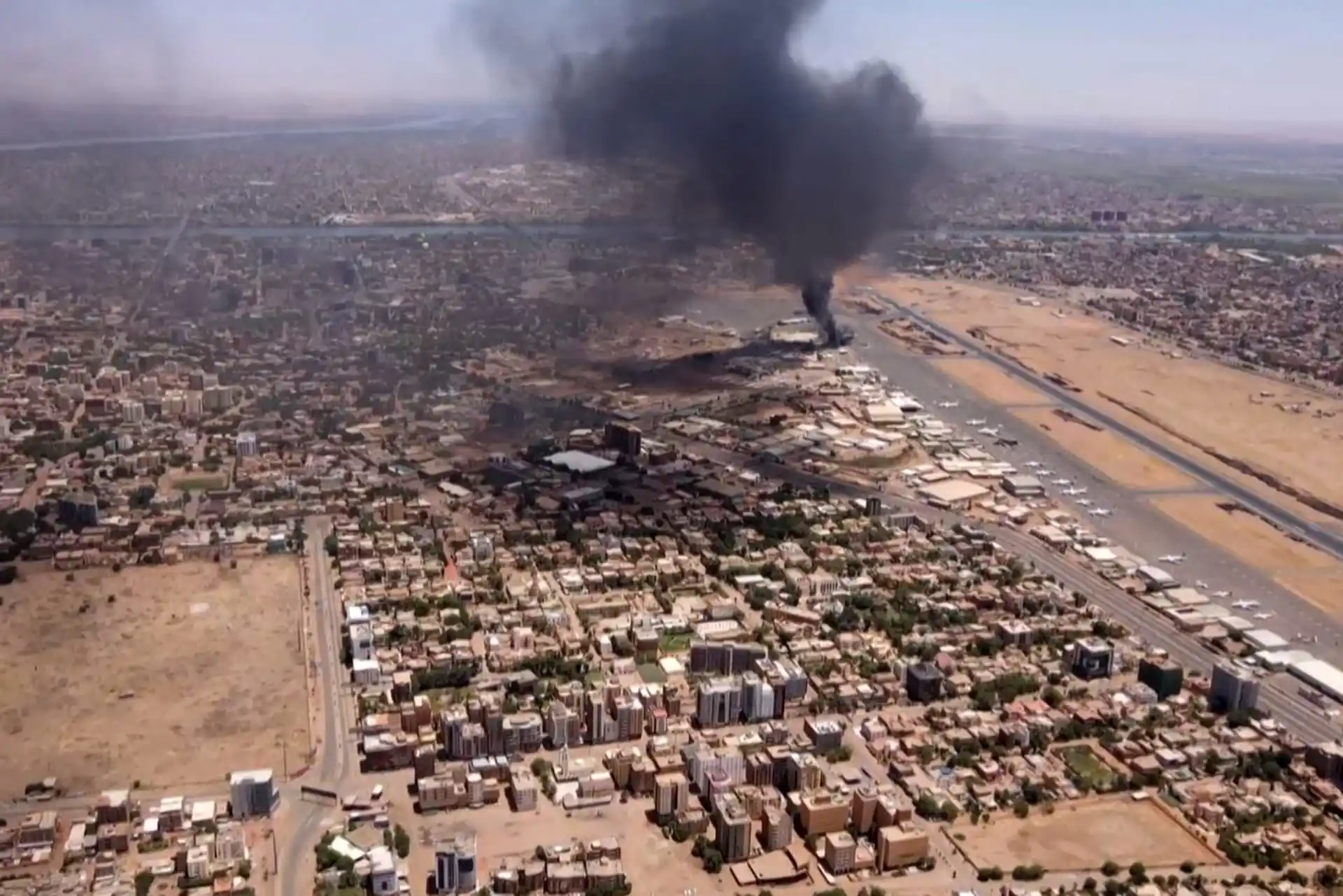
The Sudanese war, which has surpassed a thousand days, is witnessing qualitative escalation on decisive strategic axes, with a clear transformation in the nature of military operations from traditional positional warfare to a multidimensional conflict combining aerial warfare with drones, expanded ground operations, and deliberate targeting of civilian infrastructure. Recent field developments reveal both sides’ attempts to secure geographic spheres of influence before any potential political settlement, amid clear military rejection of ceasefire initiatives.
Hot Strategic Axes
Blue Nile State: The Ethiopian Gateway
Blue Nile, in both its northern and southern parts, is witnessing unprecedented violent escalation, especially in areas near the Ethiopian border. This geographic positioning acquires doubled strategic importance:
Military Dimensions:
- Al-Silk and Malkan axes witnessed fierce clashes resulting in destruction of military vehicles belonging to the Rapid Support Forces
- The Sudanese army succeeded in repelling repeated attacks, indicating RSF attempts to expand toward the eastern borders
- Proximity to Ethiopia raises questions about potential supply lines and regional alliance dynamics
Strategic Importance:
- Control over Blue Nile means controlling a vital water artery and main trade routes with Ethiopia
- The region is rich in agricultural and mineral resources, making it a strategic economic target
- It constitutes strategic depth for any party seeking control over eastern Sudan
Kordofan: Battle for the Geographic Heart
North and South Kordofan states represent a decisive battlefield, where the Sudanese army is achieving tangible field progress:
Military Gains:
- Control over multiple strategic positions
- Deployment of strongpoints to secure the Exports Road, the vital economic artery connecting central Sudan to ports
- Systematic airstrikes on Rapid Support Forces positions
Emerging Challenges:
- Escalation of drone attacks around Al-Obeid city, capital of North Kordofan
- Deliberate targeting of civilian and military sites, resulting in dozens of civilian casualties
- Intensive aerial and artillery bombardment in South Kordofan leading to mass displacement, according to UN reports
Strategic Dimensions:
- Kordofan represents Sudan’s geographic heart; losing it means effectively dividing the country
- The region is rich in oil and natural resources
- It forms a connection point between Darfur and Khartoum, making it crucial in any military scenario
Darfur: The Moving Western Front
Despite less detailed information, reports indicate continued confrontations in Darfur within complex dynamics including:
- Direct conflict between the army and Rapid Support Forces
- Involvement of elements from Sudan People’s Liberation Movement-North allies in some confrontations
- Continued RSF control over vast areas, with army attempts to regain control
Qualitative Transformation: Drone Warfare
Escalation in Central Sudan
The intensive use of drones, especially around Al-Obeid, represents a qualitative transformation in the nature of war:
Tactical Objectives:
- Undermining the army’s logistical and operational capabilities
- Striking morale of forces and civilian population
- Disrupting supply and provisioning lines
Human Cost:
- Dozens of civilian casualties in recent attacks
- Targeting civilian sites potentially rising to war crimes
- Increased terror intensity in urban areas
Strategic Implications:
- Indicates development of RSF technical capabilities
- Raises questions about sources for obtaining this technology and who operates it
- Reflects a long-term war of attrition strategy
Government Air Response
The Sudanese army systematically uses air power:
- Airstrikes on RSF positions in Kordofan and Darfur
- Intensive artillery bombardment in South Kordofan
- Using aviation to support ground operations and secure field advances
Catastrophic Humanitarian Dimensions
Mass Displacement
- Large numbers of South Kordofan residents displaced due to intensive bombardment
- Continuous flow of refugees internally and externally toward neighboring countries
- Near-complete collapse of basic services in conflict areas
Service Collapse
- Sharp deterioration in civil and health services
- Electricity and water cuts in most conflict areas
- Collapse of educational system and closure of schools and universities
Humanitarian Crisis
- Millions in urgent need of humanitarian assistance
- Escalating famine risk in vast areas
- Disease spread due to health infrastructure collapse
Political Deadlock: Rejection of Settlement
Rejection of Ceasefire Initiatives
Military and political statements confirm:
- Clear rejection from both sides of some ceasefire initiatives
- Considering military resolution the primary option
- Absence of any near political horizon to end the conflict
Motivations for Continuation
From the Army’s Side:
- Restoring military institution prestige
- Preventing Sudan’s division or creation of parallel entities
- Preserving Sudanese state unity
From Rapid Support Forces’ Side:
- Seeking to impose a new political reality
- Control over strategic economic resources
- Achieving political legitimacy through geographic control
Regional and International Dynamics
External Interventions
Field dynamics indicate:
- Flow of advanced weapons (drones) indicating external support
- Proximity to Ethiopian border raises questions about potential regional role
- Complex supply networks transcending national borders
Impact on Neighboring Countries
- Chad receiving hundreds of thousands of refugees and facing security and economic pressures
- Egypt closely monitoring Blue Nile developments and their implications for its water security
- Ethiopia dealing with security repercussions on its western borders
- South Sudan facing escalating humanitarian and economic challenges
Regional Economic Dimension
- Disruption of cross-border trade routes
- Severing oil lines and exports
- Refugee flow draining host countries’ resources
- Threatening regional food security
Strategic Assessment: Balance of Power and Prospects
Current Military Balance
Sudanese Army Strengths:
- Monopoly on conventional air power
- Control over major cities and capital
- Popular support in certain areas
- Clearer command structure and control
Rapid Support Forces Strengths:
- Tactical flexibility and rapid movement capability
- Control over resource-rich areas (gold, agricultural lands)
- Effective external supply networks
- Advanced drone usage
The Blocked Path
Field reality reveals:
- Neither side’s ability to achieve decisive military resolution
- Long-term war of attrition depleting both sides’ resources
- Geographic areas transforming into semi-stable spheres of influence for each party
- Rising human and economic costs in unsustainable manner
Decisive Factors for the Coming Phase
Militarily:
- Ability to secure supply and provisioning lines
- Control over strategic areas (Blue Nile, Kordofan, Exports Road)
- Effectiveness of air power and drone usage
Politically:
- Continuation or severance of external support for each side
- Extent of political will resilience to continue fighting
- Impact of regional and international pressures
Humanitarianly:
- Population’s capacity to endure more suffering
- Scale of humanitarian catastrophe and its impact on international public opinion
- Sustainability of societal support for either party
Conclusion: Continuing War of Attrition
The Sudanese war has entered a new phase of strategic escalation, where each side seeks to improve its field position before any potential political settlement. The use of drones and intensive aerial bombardment reflects a shift toward more destructive and bloody warfare, with escalating human costs.
The current military situation indicates a relative balance of power making military resolution nearly impossible without catastrophic cost. Rejection of ceasefire initiatives, despite the war surpassing a thousand days, reflects both sides’ insistence on betting on military solution, in clear disregard of field reality and enormous human cost.
The three strategic axes – Blue Nile, Kordofan, and Darfur – constitute arenas of geographic and economic resolution, but complete control over any of them remains elusive for both sides. Meanwhile, Sudan continues falling into a deeper abyss, while civilians pay the highest price for a war with no winner except destruction and devastation.