
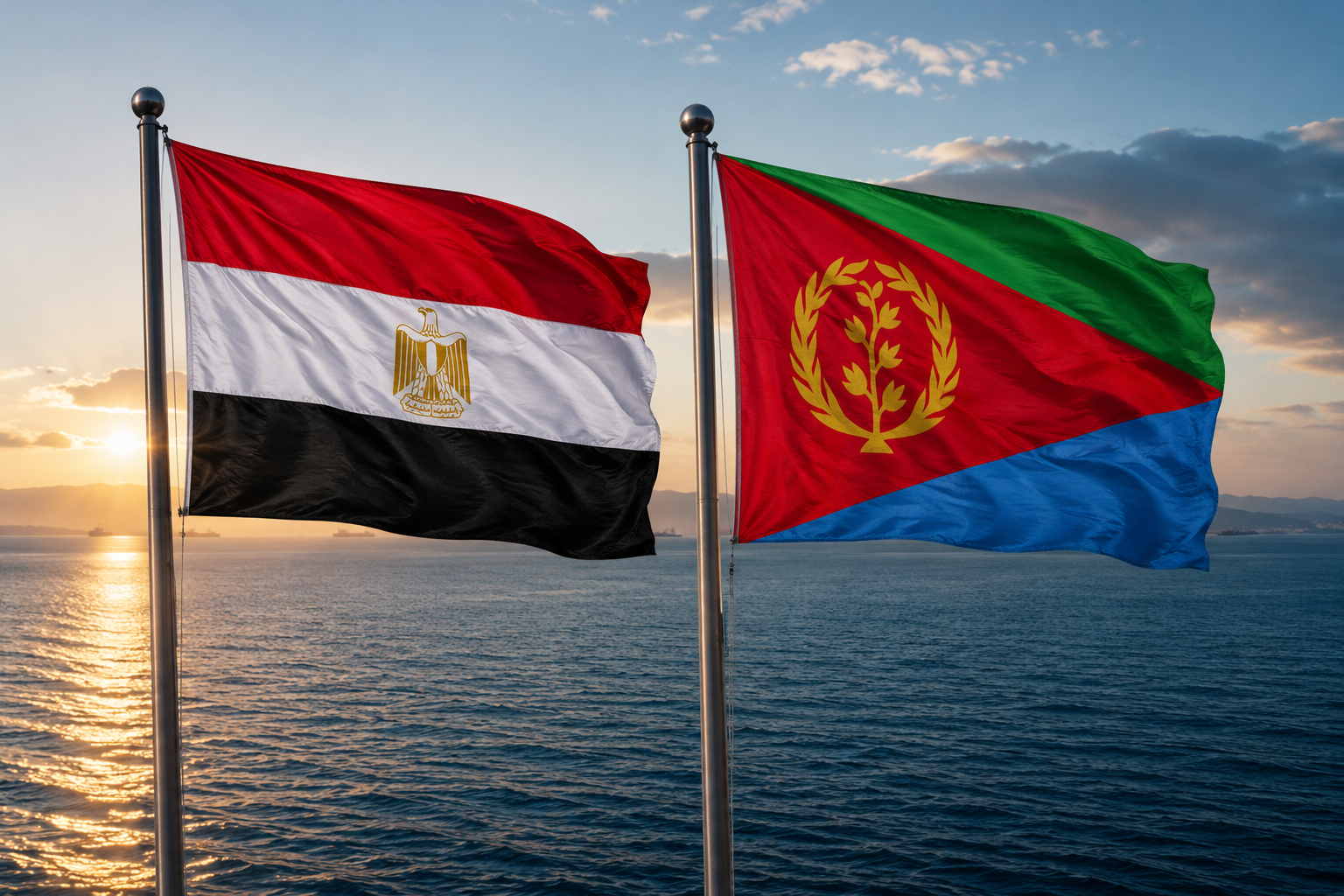
The News On May 16, Egypt and Eritrea signed a maritime transport cooperation agreement during a visit by Foreign Minister Badr Abdelatty and Transport Minister Kamel el-Wazir to the Eritrean capital Asmara, in the presence of President Isaias Afwerki. The agreement provides for the operation of a shipping line linking Egyptian and Eritrean ports across the Red Sea, with Cairo expressing readiness to transfer its expertise in ports, railways, and logistics. But the political message was more significant than the agreement’s terms: Cairo and Asmara affirmed that Red Sea security and governance must remain the exclusive responsibility of the littoral states — a position implicitly targeting Ethiopia’s ambitions to establish a permanent military or naval foothold on the coast.
Why This Matters to America The Red Sea and Bab el-Mandeb are vital corridors for global trade, energy, and supply chains, directly linked to the U.S. military presence at Camp Lemonnier in Djibouti. Containing Ethiopia’s push for a military naval access point reduces the risk of a regional clash that could threaten freedom of navigation and destabilize the Horn of Africa. From Washington’s perspective, supporting the balance among Egypt, Eritrea, and Somalia helps prevent the expansion of Chinese and Russian influence in the Red Sea, where Beijing is intensifying its port presence across the region.
Implications The Egyptian-Eritrean initiative is not merely a shipping agreement — it is part of a deliberate regional architecture designed to prevent Ethiopia from converting its legitimate economic need for sea access into military influence that reshapes regional balances. Cairo is fighting on two fronts simultaneously: the GERD dispute in the Nile Basin and the Red Sea contest in the Horn of Africa. Should Ethiopia succeed in securing a coastal foothold on sovereign or quasi-sovereign terms, it would gain additional leverage against Egypt on the water file as well.