
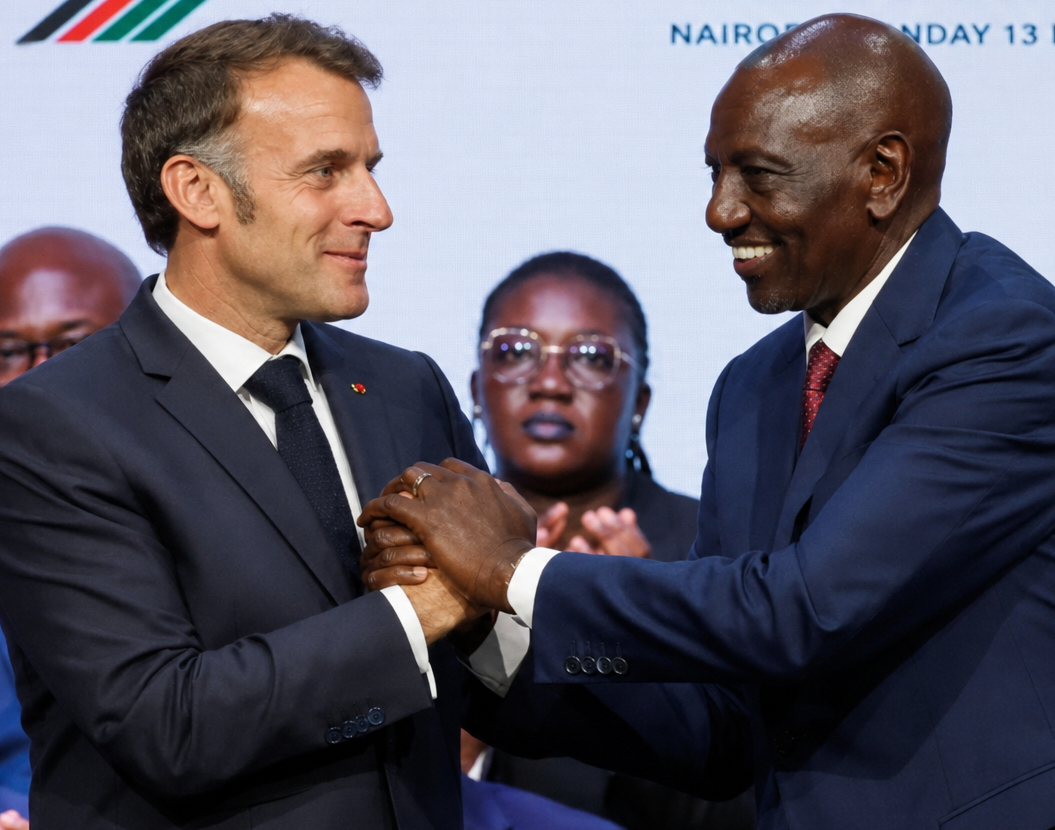
At the “Africa Forward” summit in Nairobi, Macron announced €23 billion ($27 billion) in investments, distributed between €14 billion from French public and private companies and €9 billion from African entities, spanning energy, agriculture, and artificial intelligence — with projections of 250,000 jobs created across France and Africa.
The summit — held under the banner “Africa-France Partnerships for Innovation and Growth” — is the first of its kind hosted by France in an English-speaking African country, marking a symbolic departure from its traditional approach anchored in the Francophone sphere.
Macron declared that the relationship is now “completely free of hang-ups,” yet in the days before the summit he called on African leaders to stop attributing all responsibility to colonialism, noting that former colonial powers are no longer “the predators of this century.”
The Architecture of France’s Shift
Background: A Decade of Losses Since 2020, France has lost its influence in Mali, Niger, Burkina Faso, and Chad, with its forces expelled from the Sahel region. Russia through Wagner/Africa Corps, China through investment, and Turkey through arms and a religious model — all have filled the vacuum.
Reading the Symbolic Messages: The choice of Nairobi is not accidental. This is the first time France has co-hosted an African summit with an English-speaking country — a clear signal that Paris acknowledges its Francophone model is no longer sufficient and that it needs partners in East and Southern Africa, where its influence has historically been weakest.
The Contradiction Embedded in the Discourse: Macron declared that “the days of aid are behind us” and that his focus is on “joint investment.” Yet he simultaneously called on African leaders to invest in France. This “mutual partnership” framing is in practice more realistic and respectful than what the relationship had historically been — but it is also a self-exculpatory narrative that attempts to turn the page on recent setbacks.
The American and Chinese Context: The timing is not coincidental. Against the backdrop of U.S. retreat from African development financing and the gutting of USAID, and amid Chinese competition through the Belt and Road Initiative, France is positioning itself as a “third option” between Washington and Beijing. The summit focuses on artificial intelligence, the blue economy, and green transition — fields where France retains competitive capacity.
Assessment: Is It Enough? The announced financial volume (€23 billion) appears substantial, but must be read in context: €9 billion of it comes from the African side, meaning France’s net contribution is only €14 billion. Investment announcements at forums also frequently remain at the level of intentions. The true measure of this repositioning’s success will be whether Paris can deliver a partnership model that genuinely differs from its post-independence relationship with Africa — rather than simply repackaging the old model in new language.