
The Event:
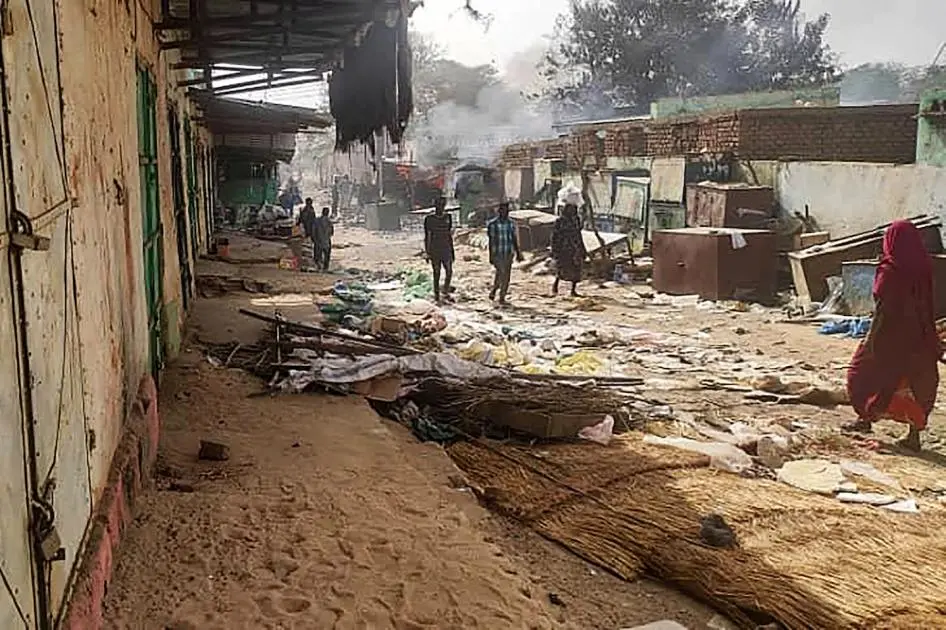
On December 30, 2025, a UN team reached the city of El-Fasher (capital of North Darfur state) for the first time since its fall to the Rapid Support Forces on October 26, 2025. Denise Brown, the UN Resident and Humanitarian Coordinator in Sudan, described the city as a “crime scene.” She said UN staff who visited the city reported that “there were very few people” they could see during the hours-long visit. The city, which was crowded with residents and displaced persons, has become almost deserted.
Background:
El-Fasher Before the Fall: El-Fasher is a historic and major city in Darfur, capital of North Darfur state. Before the current war, it was home to hundreds of thousands of residents and hosted large numbers of displaced persons from other areas of Darfur due to previous conflicts. When the city fell in October 2025, it was estimated that about 260,000 people were trapped in it.
The Long Siege: The Rapid Support Forces began besieging El-Fasher in April 2024 – meaning 18 full months of siege before the fall. During this period:
- The RSF prevented most food and humanitarian supplies from entering
- Continuously bombed the city with drones and artillery
- The siege led to confirmed famine (declared by relief organizations)
- In the final months before the fall, the RSF built an earthen wall around the city to prevent civilians from fleeing except through its checkpoints
Strategic Importance: El-Fasher was the last major stronghold of the Sudanese army in Darfur. Its fall means almost complete Rapid Support Forces control over all of Darfur, a region the size of France. This means an actual division of Sudan: east controlled by the army, west controlled by the RSF.
Analysis:
“Crime Scene” – What Does This Mean?
When a senior UN official describes an entire city as a “crime scene,” this is not a metaphorical journalistic description – it is a legal term. It means what happened here rises to serious crimes under international law, and that the place needs to be preserved as evidence for future criminal investigations.
Documented Atrocities:
Mass Killings:
- Reports and videos of mass civilian killings
- RSF fighters filmed themselves shooting residents
- Extrajudicial executions – men, women, and children
- Saudi Maternity Hospital Massacre: About 500 people (patients, health workers, and companions) were killed in the hospital, which was the only partially surviving health facility from the bombing
Systematic Ethnic Targeting: The killing was not random – it was systematic and ethnically directed. The Zaghawa, the majority ethnic group in El-Fasher, were the main target. Why? Because the Zaghawa allied with the army in 2023 after the Rapid Support Forces committed massacres against the Masalit and other non-Arab groups in the city of El-Geneina (West Darfur) in 2023.
Human Rights Watch documented those massacres in a May 2024 report and described them as “ethnic cleansing.” Testimony from a boy (17 years old) in the report: “Two RSF members… snatched the children from their parents, and when the parents started screaming, two other RSF members killed them. Then they gathered the children and shot them. They threw their bodies in the river, along with their belongings.”
Widespread Sexual Violence: Documented reports from rights organizations about:
- Mass rape
- Systematic sexual violence as a weapon of war
- Special targeting of women and girls
- A report from the Strategic Initiative for Women in the Horn of Africa (SIHA) documented about 1,300 cases of sexual violence, 87% attributed to the RSF
Detention and Kidnapping:
- Mass arbitrary detentions
- Kidnapping of men and youth
- Torture
- Forced disappearance
Preventing Escape: The earthen wall around the city reveals a clear intention: to trap civilians inside the city before storming it. Those who managed to flee faced enormous risks:
- Shooting at those fleeing
- Detention at checkpoints
- Violence and extortion
- Many died on the way
Historical Dimension – Tragic Repetition:
Darfur 2003-2005: Darfur witnessed genocide between 2003-2005 that claimed about 300,000 lives and displaced 2.5 million. The Janjaweed militia (supported by Bashir’s government) committed atrocities against African groups (Fur, Masalit, Zaghawa). Killings, rape, burning villages – all happened systematically.
International Criminal Court: In 2009 and 2010, the International Criminal Court issued two arrest warrants against Omar al-Bashir (former Sudanese president) on charges of war crimes, crimes against humanity, and genocide in Darfur.
Horrific Repetition: Now, in 2025, same area, same victims (African groups), and same perpetrators (Rapid Support Forces = former Janjaweed). History repeats itself tragically, and the world watches – again.
Catastrophic Humanitarian Situation:
Mass Displacement:
- More than 100,000 people fled immediately after the fall
- In total, 1.17 million people originally from El-Fasher have been displaced since the start of the war – this represents 13% of all displaced persons in Sudan
Tawila – Exhausted Refuge City: Most of those fleeing El-Fasher went to Tawila, a city located 60 km from El-Fasher. But:
- Tawila was already hosting more than 652,000 internally displaced persons before El-Fasher’s fall
- Now, after the fall, larger numbers have arrived
- Resources are completely insufficient
- People arrive “exhausted, traumatized, dehydrated and starving”
- 35% of those fleeing El-Fasher suffer from “severe acute malnutrition” – meaning they are on the brink of death
Limited Access: The International Rescue Committee (IRC) team in Tawila said something frightening: “Despite reports of large numbers of families trying to flee toward Tawila, we saw very few arrive.” What does this mean? With an estimate that about 150,000 civilians remained in El-Fasher at the time of the fall, and most wanted to flee, but few arrived – this suggests horrific possibilities:
- Many died
- Many are detained
- Many are stuck in severe dangers along the way
Shelter and Services:
- Tawila, despite humanitarian efforts, cannot meet the needs
- Overcrowded temporary shelter
- Limited water
- Inadequate healthcare
- Scarce food
Killing and Kidnapping Health Workers: Immediately after the city’s fall, 460 health workers and patients were killed or kidnapped at the Saudi hospital – the last health facility. This means a total collapse of healthcare in the city.
Accountability and Justice:
Fact-Finding Mission: The Independent International Fact-Finding Mission on Sudan (established in October 2023) gathered “direct and harrowing testimonies from survivors” and said there are “reasonable grounds to believe” that both parties committed serious human rights and international humanitarian law violations “amounting to atrocity crimes.”
International Criminal Court:
- The ICC, which has had jurisdiction over Darfur since 2005, announced it is “taking steps to preserve and collect evidence” for future prosecutions
- But the question: when? Bashir was convicted 15 years ago and was never tried. How long will the victims of 2025 wait?
Impunity: The fact-finding mission’s report concluded that “entrenched impunity remains one of the main drivers of ongoing violence.” Meaning: perpetrators are not held accountable, so they continue. And victims are denied justice.
Strategic and Political Importance:
Turning Point in the War: The fall of El-Fasher means almost complete Rapid Support Forces control over Darfur (a region the size of France). This completes the actual division of Sudan: east for the army, west for the RSF. The International Crisis Group warned that the war “could settle into a prolonged stalemate that morphs into permanent partition.”
Blow to Diplomacy: The fall of El-Fasher came just days before a meeting in Washington that brought together representatives of the two warring parties and Egypt, Saudi Arabia, and the UAE (the Quartet). The attack on El-Fasher thwarted diplomatic efforts that seemed promising for the first time in over a year.
The World’s Delayed Awakening: It took the fall of El-Fasher, the massacres, and horrific videos for the world to really start paying attention. US President Trump expressed “disgust” at the videos. But the question: why did we wait until now?
International Failure:
- Humanitarian response funding reached only 6.6% of what’s needed
- The UN was forced to cut its appeal in half due to “donor fatigue”
- The International Rescue Committee placed Sudan at the top of the “Emergency Watchlist” for 2026
Painful Comparisons: Amnesty International, in a statement marking two years of conflict, noted that “the world contributed only 6.6% of the funds needed to address the enormous humanitarian catastrophe in the country.” By comparison, crises in Ukraine and Gaza received much more attention and funding – not because they are worse, but for geopolitical reasons.
Consequences:
Short-term:
- El-Fasher will remain a humanitarian disaster area
- Thousands may have died or will die from hunger and disease
- No prospect for displaced persons’ return soon
Medium-term:
- Sudan is de facto partitioned – is this permanent?
- More atrocities likely in other areas
Justice:
- El-Fasher will be a major case in any future accountability
- But justice, if it happens, will come far too late for the victims of 2025
Painful Lesson: El-Fasher proves – once again – that the international community fails to protect civilians from mass atrocities. The “Responsibility to Protect” adopted by the UN after Rwanda and Bosnia remains an empty slogan when it comes to Africa.