
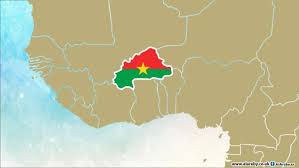
Burkina Faso: Escalating Al-Qaeda Attacks and a Deepening Security Crisis
General Situation:
Burkina Faso faces a worsening security crisis since 2015, with the country experiencing continuous attacks from jihadist groups linked to al-Qaeda, primarily the Group for Support of Islam and Muslims (JNIM). Burkina Faso became the world’s most terrorism-affected country in 2024, surpassing Afghanistan and Iraq for the first time in 13 years, according to the Global Terrorism Index.
Recent Major Attacks
Lankoure Attack (January 2026):
On January 8, 2026, JNIM militants took control of the town of Lankoure in Sourou province, claiming to have killed 17 soldiers. According to other sources, 8 soldiers and several civilians were killed in the attack.
Djibo Attack (May 2025):
On May 11, 2025, the group launched a large-scale attack on a military base in the northern town of Djibo, claiming to have killed 200 soldiers. The attack also targeted a police station and local market. The attack came while junta leader Ibrahim Traore was visiting Russia to meet President Vladimir Putin. Analysts said this was “one of the deadliest attacks in Burkina Faso,” adding: “What we’re seeing here is the pivot point where these armed groups that normally attack villages are now trying to take over towns.”
Barsalogho Massacre (August 2024):
In one of the deadliest attacks in Africa in recent decades, JNIM militants killed up to 600 people (according to a French security assessment) in the town of Barsalogho. Civilians were digging trenches to protect the town on military orders when militants attacked and shot them systematically. Women and children were among the dead. UN Secretary-General António Guterres “strongly condemned” the attack.
Mansila Attack (June 2024):
The group claimed to have killed more than 100 soldiers in an attack on a military base in the Mansila region near the border with Niger. Security analysts described it as “one of the deadliest attacks on government forces ever.”
February 2024 Attacks:
In February 2024, JNIM fighters attacked a mosque and church in northern Burkina Faso, killing dozens of worshippers in the villages of Natiaboani and Essakane. In another attack on the villages of Kamsilga, Soroe, and Nodin, the group killed more than 170 people, including women and children.
Group for Support of Islam and Muslims (JNIM)
Formation:
This al-Qaeda-affiliated group was formed in March 2017 from the merger of four armed groups:
- Al-Qaeda in the Islamic Maghreb
- Ansar Dine
- Al-Mourabitoun
- Macina Liberation Front
Leadership:
Led by Iyad Ag Ghaly (Abu al-Fadl), a Malian fighter and founder of Ansar Dine. Ag Ghaly was a member of the separatist ranks of the Tuareg ethnic group in northern Mali’s Kidal region and participated in fighting there in the early 1990s.
Areas of Operation:
The group’s operations initially started in Mali before spreading to Burkina Faso and parts of Niger. JNIM has also launched attacks in the northernmost regions of Ghana, Ivory Coast, Benin, and Togo.
Group Strategy:
JNIM exploits local and social divisions in the territories it controls, appealing to groups that perceive themselves as marginalized, such as the Tuareg and Fulani people. The group has recently changed its strategy to target secondary towns instead of just attacking villages, representing a dangerous escalation.
Catastrophic Humanitarian Situation
Horrifying Numbers:
- More than 26,000 killed since 2015 (according to ACLED conflict monitor)
- More than 2 million internally displaced
- More than 8,000 killed in 2023 alone due to violence in the country
- Half the country outside effective government control
Acute Malnutrition Rates:
In some areas of Darfur: 53% of children suffer from acute malnutrition (Um Baru – highest recorded rate)
Collapsed Services:
- Schools and health facilities closed in vast areas
- Millions deprived of basic services
- Northern and eastern regions most affected
Government Response: Military Coups
January 2022 Coup:
The army overthrew President Roch Marc Christian Kaboré in early 2022 as insecurity worsened. The coup was led by Lieutenant Colonel Paul-Henri Sandaogo Damiba, promising to quickly resolve the security crisis.
September 2022 Coup:
On September 30, 2022, a new coup overthrew Colonel Damiba, bringing Captain Ibrahim Traore to power due to “Damiba’s inability to contain the jihadist insurgency.” According to Traore, he and other officers tried to urge Damiba to “refocus” on the rebellion, but ultimately chose to overthrow him because “his ambitions were diverting away from what we set out to do.”
Severing Relations with France:
In late January 2023, the ruling junta demanded France withdraw its forces, numbering between 200 and 400 special forces members, from Burkina Faso after years of fighting jihadists. France agreed and completed its withdrawal by February 19, 2023.
Turn Toward Russia:
The current military government led by Captain Ibrahim Traore severed relations with France and turned to Russia to purchase weapons and deploy fighters from the Wagner Group (now known as Africa Corps). However, armed groups continued to control wider areas.
Assessment: Failure of Military Strategy
Despite military coups and promises to resolve the security crisis, and the shift from Western partners to Russia, evidence indicates that:
- Jihadist groups are expanding, not shrinking: JNIM has seized wider areas and now targets secondary towns, not just villages.
- Increased civilian casualties: Indiscriminate military operations and human rights violations by government forces and volunteers (VDP) increase jihadist group recruitment.
- Deteriorating humanitarian situation: More displacement, more hunger, more service collapse.
- Russian forces ineffective: The presence of Africa Corps has not improved the security situation but has been associated with human rights violations that worsen conditions.
Regional Implications: Spreading Violence
Violence has begun spreading to more stable neighboring countries. In July 2024, militants from the Burkinabe border town of Kompienga launched an attack inside Togo, seized a Togolese army camp, killed at least 12 soldiers, and looted weapons. Reports indicate “rumors about the creation of a new JNIM wilaya for Togo.”
Conclusion
Burkina Faso faces a catastrophic security and humanitarian crisis, as the al-Qaeda-affiliated Group for Support of Islam and Muslims launches continuous attacks claiming the lives of hundreds of soldiers and civilians. Despite military coups and promises to resolve the crisis, jihadist groups continue to expand and control wider areas, threatening state collapse and destabilizing the entire region. Burkina Faso has become the world’s most terrorism-affected country, and military solutions alone appear insufficient to address the root causes of the conflict: poverty, marginalization, weak governance, and social divisions.