
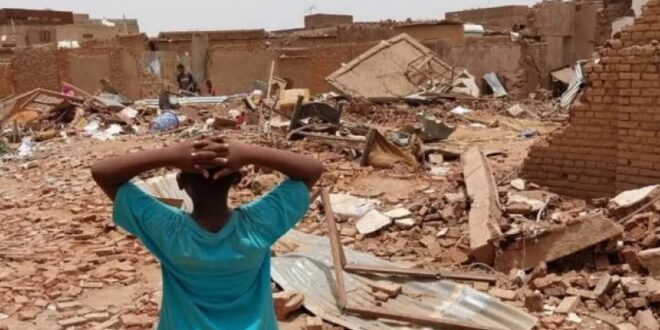
The Event:
On January 9, 2026, the Sudanese civil war completed 1,000 days since its outbreak on April 15, 2023. This number – a thousand days – is not just a temporal milestone but represents a thousand days of daily suffering for millions of Sudanese. UN and international relief organizations marked this sad occasion by issuing statements and reports describing the situation as “the world’s largest humanitarian crisis” and “the worst hunger and displacement crisis on earth.”
Horrifying Numbers:
Human Casualties:
- ~150,000 killed (estimates – the real number may be much higher)
- Over 100,000 confirmed killed
- Tens of thousands died from hunger and disease (not usually counted in “war deaths” figures)
Displacement – A Third of the Population Homeless:
- 14 million displaced – this is one-third of Sudan’s population (45 million)
- Of these, 9.3 million internally displaced (within Sudan)
- 4.3 million refugees crossed borders to neighboring countries
Scale of the Disaster in Global Context:
- Sudan hosts 15% of all internally displaced persons in the world
- Meaning: one in every seven internally displaced persons worldwide is Sudanese
- At the height of the crisis, Sudan hosted the largest number of internally displaced persons in any single country
Hunger and Famine – Slow Death:
- 30.4 million people (two-thirds of the population – 67%) need humanitarian assistance or protection
- 21.2 million face acute food insecurity (crisis level or worse according to IPC classification)
- Confirmed famine (IPC Phase 5) in El-Fasher (North Darfur) and Kadugli (South Kordofan)
- 20 additional areas in Darfur and Kordofan at risk of famine
- More than 375,000 people in catastrophe condition (IPC Phase 5)
Children – Lost Generation:
- 16 million children need humanitarian assistance
- 3.7 million children and pregnant or breastfeeding women suffer from malnutrition
- 55% of internally displaced persons are children under 18
- In some areas of Darfur: 53% of children suffer acute malnutrition (Um Baru – highest recorded rate)
Background:
How the War Began: On April 15, 2023, sudden fighting broke out between the Sudanese army (led by General Abdel Fattah al-Burhan) and the Rapid Support Forces (led by Mohamed Hamdan Dagalo “Hemedti”). The two parties had been partners in power since the October 2021 coup that overthrew the civilian transitional government, but they turned into enemies due to a power struggle and disagreements over integrating the Rapid Support Forces into the army.
What began as a power struggle in Khartoum quickly turned into:
- Comprehensive civil war
- Unprecedented humanitarian catastrophe
- Complete collapse of the Sudanese state
- Mass atrocities reaching the level of genocide (in Darfur)
Analysis:
“Worse than Gaza and Ukraine” – But the World Doesn’t Care:
Despite the fact that the humanitarian figures in Sudan exceed most other crises, media coverage and international attention are much less. Why?
Factors Explaining the Neglect:
- Geographic location: Sudan is in central Africa – far from Europe and America
- No clear direct interests: No significant oil (compared to the past), no strategic location like Ukraine
- Difficulty of journalist access: War zones are dangerous and difficult to reach
- “Crisis fatigue”: The international community is exhausted from multiple crises
- Racism: A painful truth – African lives are valued less in Western media
Shocking Comparison:
- Ukraine: Massive funding, continuous daily coverage, huge military support
- Gaza: Intensive coverage, daily international discussions
- Sudan: Only 6.6% of required funding arrived, intermittent coverage
Collapse of Statistics – Worse Than We Know:
The numbers mentioned above are frightening, but they are most likely lower than reality:
- Vast areas are impossible to reach
- No capacity to count the dead accurately
- Many died in remote areas and were not recorded
- Relief organizations themselves say: “Reality is worse than we know”
Devastating Historical Comparison:
The International Organization for Migration (IOM) said something shocking: “The war displaced twice as many people in one year compared to what Sudan displaced over the previous two decades combined.”
This puts the crisis in an exceptional historical context. Sudan has experienced wars and conflicts for decades (South Sudan, Darfur, Nuba Mountains, Blue Nile) – but all those conflicts combined over 20 years displaced less than what this war displaced in one year!
Horrific Cyclical Nature of Displacement:
41% of the 3.8 million people who were already internally displaced in Sudan before the current war (due to previous conflicts) were displaced again since April 2023.
What does this mean? Families fled their homes in Darfur in 2003 or 2010, lived in camps for years, then were forced to flee again in 2023. Some were displaced three or four times. Imagine: you lose your home, build a modest life in a camp, then lose that too, and start from scratch… then it repeats. This creates “cycles of displacement, loss, and uncertainty” – a phrase used by the International Organization for Migration.
Pace of Violence – No Respite:
The International Organization for Migration calculated that on average, 5 displacement-triggering events occurred every week throughout the thousand days.
Meaning: every week, in at least five different places, people were fleeing their homes because of fighting, attack, or bombing. There are no real “periods of calm” – violence and displacement continue, week after week, for a thousand days.
Complete Collapse of State Institutions:
Infrastructure:
- Electricity grid: Collapsed in most areas
- Water: Water systems destroyed or not functioning
- Roads and bridges: Many destroyed or dangerous due to mines
- Communications: Intermittent
Health:
- Hospitals: 70-80% not functioning
- Health workers: Killed, fled, or not receiving salaries
- Medicines: Very scarce
- Epidemic spread: Cholera, malaria, measles
Education:
- Millions of children out of school
- Schools destroyed or used as shelters for displaced persons or military bases
- Teachers without salaries
Economy:
- 37.5% contraction in GDP in 2023
- Rampant inflation (146% in December 2023, may be higher now)
- Sudanese pound in freefall
- Most economic activity stopped
Agriculture – Source of Life Stopped: Sudan was the “breadbasket of the region” – an agricultural country. But the war:
- Prevented farmers from accessing their fields (fear of fighting)
- Destroyed irrigation systems
- Looted or killed livestock
- Cut supply chains
Result: Even areas that produced surplus food are now hungry.
Why This Matters Globally – Not Just an “African Problem”:
- Regional Stability: Sudan borders seven countries: Egypt, Libya, Chad, Central African Republic, South Sudan, Ethiopia, Eritrea. Instability spreads:
- 4.3 million refugees crossed borders – an enormous burden on already poor countries
- Illegal arms trade
- Spread of armed groups
- Threat to the entire Horn of Africa region
- Red Sea – Vital Trade Route: Sudan has a long coast on the Red Sea, one of the world’s most important trade routes (Suez Canal). Instability in Sudan affects:
- Maritime security
- International trade
- Strategic interests of major powers
- Migration to Europe: Sudan has always been a transit point for African migrants toward Europe (via Libya and Egypt). Sudan’s collapse means:
- More irregular migration
- More human trafficking
- Pressure on Europe
- Dangerous Precedent for International Law: If the international community continues to ignore a crisis of this magnitude, what is the message?
- Mass atrocities can occur with impunity
- “Responsibility to Protect” is just a slogan
- African lives are not worth what European lives are worth
Consequences:
Short-term:
- More death daily – from hunger, disease, and violence
- Spread of epidemics