
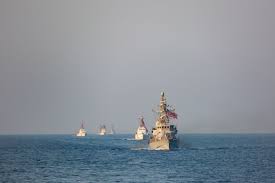
Since the outbreak of the Iran war in February 2026, Bahrain has shifted from a rear-area logistics hub to a frontline laboratory for modern multi-domain conflict. While the island remains outside the core missile exchange between Iran and Israel, it has become a critical node in the confrontation between Iran and the United States, combining strikes on naval infrastructure, heavy industry, and—most significantly—commercial cloud computing systems.
Direct Pressure on the U.S. Fifth Fleet
The opening phase of the conflict centered on the Naval Support Activity Bahrain, headquarters of the U.S. Fifth Fleet. A large missile-and-drone barrage on February 28 targeted radar arrays and satellite communications systems used to coordinate regional naval and air operations. Although casualties were limited, the strike demonstrated Iran’s willingness to challenge U.S. command infrastructure directly rather than relying solely on proxy escalation.
Subsequent attacks shifted toward more precise targeting of operational support nodes rather than personnel, indicating a strategy aimed at degrading command effectiveness rather than provoking immediate escalation.
Why it matters:
Iran signaled that Gulf basing arrangements themselves—not just deployed forces—are now legitimate targets in wartime planning.
A Shift to Digital Infrastructure as a Battlefield
The most consequential development came with strikes on Batelco facilities hosting Amazon Web Services infrastructure on April 1. This marked a transition from kinetic targeting of military assets to deliberate attacks on commercial cloud architecture supporting U.S. operational logistics and AI-enabled targeting environments.
Following the attack, the IRGC publicly identified major U.S. technology companies—including Microsoft, Google, Oracle, and Nvidia—as components of “enemy infrastructure,” formalizing the digital domain as an active theater of war.
Why it matters:
This represents one of the first clear cases of a state actor treating commercial cloud systems as primary strategic targets rather than collateral exposure.
Industrial Pressure Through the Alba Strikes
Iran’s drone strikes on Aluminium Bahrain (Alba) on March 28–29 expanded the campaign into industrial attrition. Alba is one of the largest aluminum smelters globally and plays a role in regional supply chains linked to aerospace and defense manufacturing.
The temporary shutdown of reduction lines illustrates a broader strategy: raising the economic cost for states hosting U.S. military infrastructure without requiring escalation against population centers.
Why it matters:
Industrial targeting introduces a deterrence logic aimed not only at Washington, but at Gulf partners considering deeper integration with U.S. defense logistics networks.
Expanding Into Civilian Infrastructure
The conflict has increasingly moved into what analysts describe as the “grey-zone layer” of infrastructure warfare. Drone strikes on desalination facilities, damage to the Bapco refinery on Sitra Island, and repeated alerts in Manama signal a widening campaign against systems essential to civilian resilience.
Urban targets such as the Era Views Tower further demonstrate a shift toward psychological pressure alongside infrastructure disruption.
Why it matters:
Targeting water and energy systems indicates a strategy designed to raise long-term hosting costs for U.S. basing arrangements across the Gulf.
Bahrain’s Emerging Strategic Role
Taken together, the strikes outline a coherent operational shift. Iran’s approach has evolved from attempting to disable the Fifth Fleet directly toward degrading the broader ecosystem that supports it—communications networks, industrial capacity, cloud infrastructure, and urban resilience.
Rather than destroying U.S. forces outright, the strategy seeks to make Bahrain progressively less viable as a regional command platform.
What to watch next
- Additional targeting of commercial cloud infrastructure across the Gulf
- Expansion of strikes on desalination and power networks
- Replication of the Bahrain model in Qatar or the UAE
- Further IRGC designation of technology firms as operational targets
Bottom line:
Bahrain is emerging as a prototype battlespace for hybrid maritime-digital warfare in the Gulf. The campaign suggests that future conflicts involving U.S. regional basing will increasingly target the infrastructure ecosystems surrounding military presence—not just the bases themselves.