
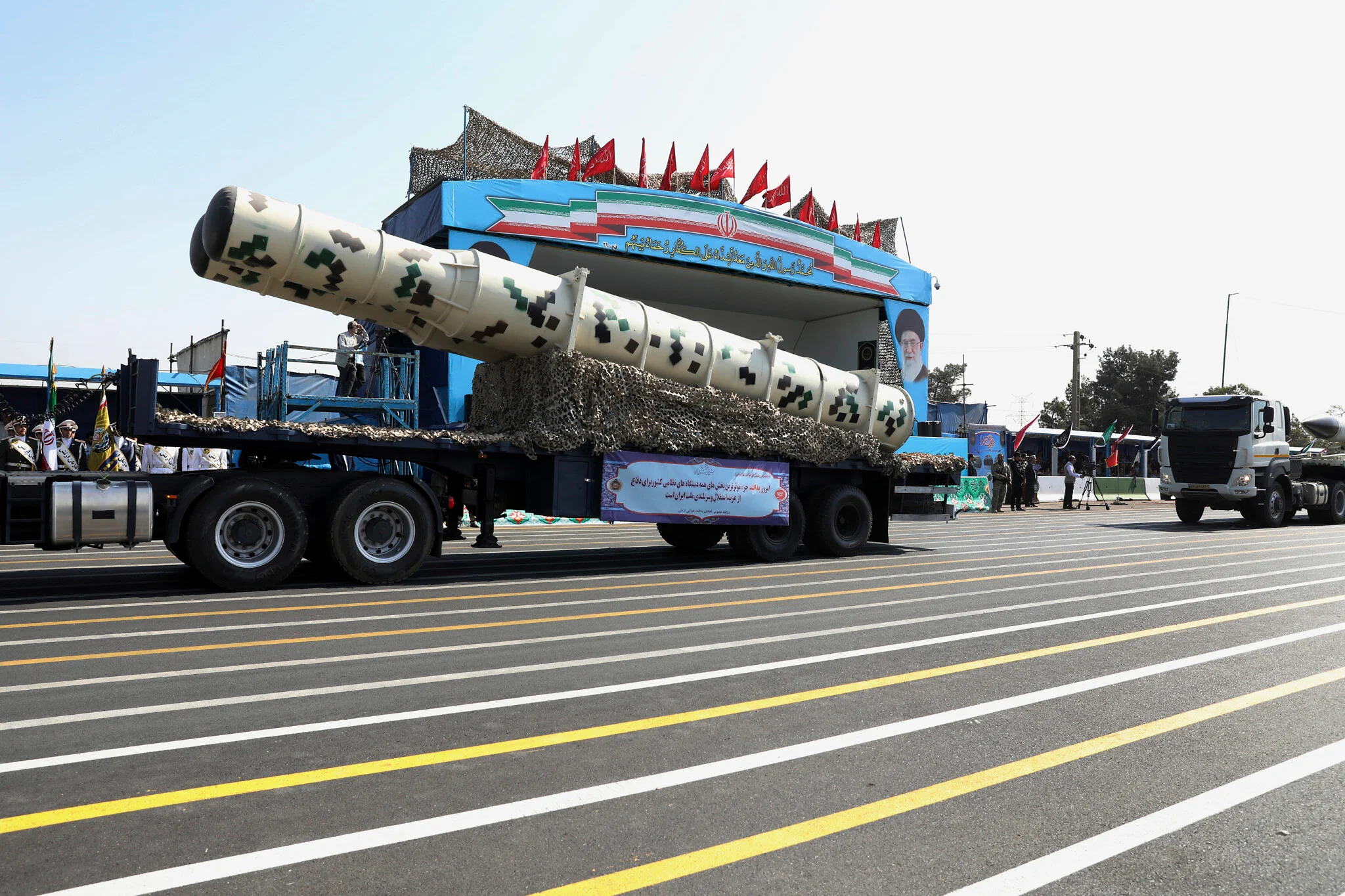
The American-Israeli Military Strategy — What Do Washington and Tel Aviv Actually Want?
The News: Rubio revealed strategic objectives with unprecedented candor, stating that Washington seeks to destroy Iran’s capacity to manufacture missiles and drones in its factories and to dramatically reduce the number of launch platforms. In parallel, the American-Israeli alliance is simultaneously targeting: the political authority structure through leadership assassinations, the military apparatus including missile capabilities, naval assets, and nuclear research centers, and internal security forces — with the aim of opening the door to a domestic popular uprising.
Why It Matters to America: This war is fundamentally about missiles, not just the nuclear program. Israeli strategists speak of the need to preserve “freedom of action” against Iran — the ability to conduct offensive operations without fear of direct missile retaliation. This places Washington in a difficult position: justifying a costly war, in human and political terms, on the grounds of securing Israeli freedom of movement in regional skies — a justification that struggles to convince the American public.
Implications: The United States is achieving tactical objectives in degrading Iranian capabilities, but defining strategic success remains a challenge, particularly as Iran’s new hardline leadership insists on major concessions before any settlement.
Three Scenarios: Scenario One — Objectives achieved, victory declared within weeks: contingent on sufficiently weakening Iran’s missile infrastructure to extract Washington’s terms in any agreement. Scenario Two — Operations expanded to weaken Iran ahead of negotiations: additional military buildup, with the war continuing four weeks or more — the timeline estimated by both American and Iranian sources. Scenario Three — The quagmire: Iran holds through a long-war strategy, economic and human costs mount on Washington until it is forced into a settlement without achieving its full objectives.
The Iranian Strategy — Tactical Losses, Strategic Gains
The News: Iran is employing a “economy of force” doctrine: directing long-range missiles at Israel directly, while deploying drones against neighboring countries to generate regional disruption without exhausting the full missile arsenal. Iran has demonstrated the ability to strike the Diego Garcia base in the Indian Ocean with ballistic missiles — meaning it could theoretically reach Berlin or Paris with the same range.
Why It Matters to America: Iran holds an enormous economic lever through the Strait of Hormuz, through which approximately one-fifth of the world’s oil passes. Tehran believes that rising energy prices give it a negotiating advantage as domestic political pressure on Washington intensifies ahead of the midterm elections.
Implications: Despite a decline in the pace of Iranian ballistic missile launches compared to the war’s opening weeks, Iran retains a massive drone arsenal and continues striking US bases in the Gulf and regional energy infrastructure.
Three Scenarios: Scenario One — Successful attrition: Iran endures through a long war, oil prices surge past one hundred dollars per barrel, and Trump is forced to negotiate on more flexible terms. Scenario Two — Gradual collapse: the new leadership under Mojtaba Khamenei lacks sufficient legitimacy to manage a prolonged war, and the system fractures from within. Scenario Three — The proxy gamble: Iran successfully activates the Houthis and Iraqi factions on a broader scale, stretching the American military system across multiple fronts simultaneously.
The Lebanon Front — A War Within the War
The News: Hezbollah retains an arsenal capable of threatening Israeli gas platforms, including Russian Yakhont missiles and Chinese C-802 anti-ship missiles, along with hundreds of drones. Meanwhile, Israel continues expanding its ground operations southward with stated intent to maintain control over parts of Lebanon even after the fighting ends.
Why It Matters to America: The death toll in Lebanon has reached 1,116, including 121 children, with nearly one million people displaced — figures that compound the scale of the regional humanitarian catastrophe and complicate Washington’s effort to maintain European allied support.
Implications: A fully opened Lebanese front would mean a war on three simultaneous axes — Iran, Lebanon, and Yemen — precisely what Washington is trying to avoid in order to contain the military and political cost.
Three Scenarios: Scenario One — Leverage for extraction: Israel uses the Lebanese front as a bargaining chip to extract concessions in any comprehensive agreement, including the neutralization of Hezbollah. Scenario Two — Escalation toward naval confrontation: Hezbollah targets Israeli gas platforms, expanding the conflict into the maritime domain with severe consequences for the global economy. Scenario Three — Lebanese collapse: the Lebanese army fails to control the situation, and the Lebanese state dissolves into an open battlefield without a functioning government.
What to Watch Today
The trajectory of the anticipated Washington-Tehran meeting expected this week and whether Iran will accept a preliminary draft agreement; the fate of the deadline extended to April 6 regarding strikes on Iranian energy facilities; and whether the newly deploying carrier strike group will meaningfully shift the aerial balance of power in the theater of operations.