
The Strategic Frame
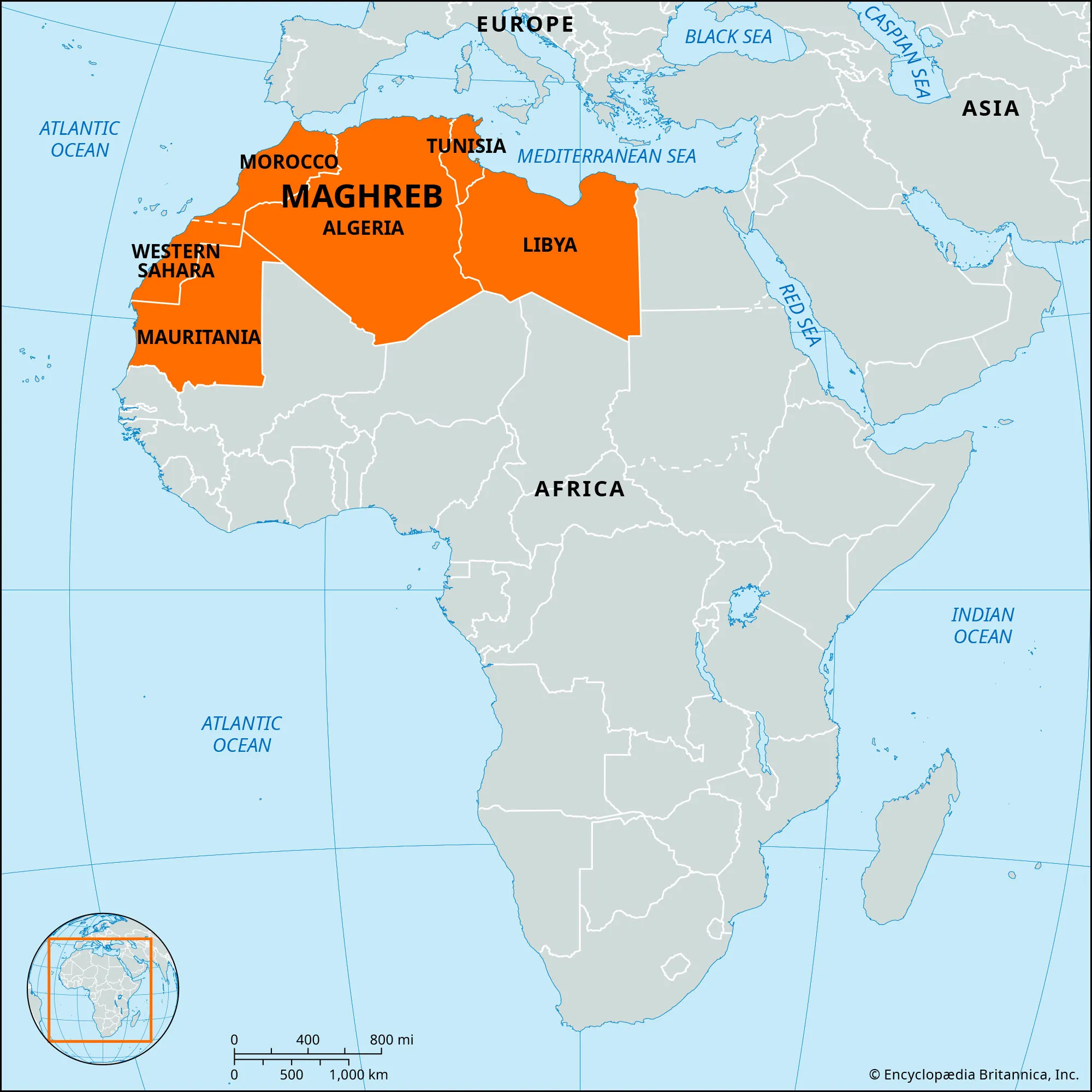
The Maghreb rarely makes global headlines as a unified story. It tends to appear in fragments — a tourism statistic here, a parliamentary vote there. But read together, this week’s developments across Tunisia, Algeria, and Morocco reveal a region navigating three simultaneous pressures: economic fragility dressed up as recovery, political systems tightening their grip, and a quiet but accelerating pivot toward China as a strategic partner.
Tunisia: Numbers Up, Freedoms Down
The economic data looks encouraging on its surface. Tourism has surpassed 11 million visitors, diaspora remittances exceeded $514 million in just the first two months of 2026 — a 6.7% increase year-on-year. By conventional metrics, Tunisia is recovering.
But recovery and stability are not the same thing. The Saied government has extended the state of emergency through the end of 2026, drawing sharp criticism from human rights organizations who see it as the legal architecture of consolidated authoritarian rule. The pattern is familiar across the region: growth indicators deployed to legitimize political closure.
The opening of two new land transport lines between Algeria and Tunisia is a small but telling sign — both countries are quietly building the connective tissue of economic interdependence even as their political models diverge from democratic norms.
The question worth asking: When does economic recovery become a tool for legitimizing political regression rather than reversing it?
Algeria: Rewriting History Without the Apology
Algeria’s parliament passed a revised version of its law criminalizing French colonialism — but with one significant deletion. The clause demanding a formal French apology was removed. The move was widely read as a diplomatic de-escalation signal toward Paris, a tactical retreat from a confrontation Algiers apparently decided it could not sustain at this moment.
Simultaneously, the European Parliament took up the question of Kabyle independence for the first time — a development that triggered immediate and fierce reaction from Algiers. For a government that treats territorial sovereignty as an absolute red line, having an EU institution even frame the question as discussable is not a procedural irritant. It is a political provocation with potential long-term consequences for Algeria-EU relations.
The strategic tension: Algeria is signaling pragmatic flexibility toward France while simultaneously facing an EU-level challenge to its internal narrative of national unity. Both pressures are landing at the same time.
Morocco: Energy, Elections, and the China Pivot
Morocco’s gas imports rose 22% in January 2026 — a figure that reflects not just consumption growth but Rabat’s deliberate effort to diversify and secure its energy supply chains. In a region where energy dependence has historically been a vector of political leverage, this is a strategic investment, not merely an economic one.
Parliamentary elections are set for September 23, 2026. The political landscape is being shaped now, months before voting begins — and the outcome will define the contours of Morocco’s next government at a moment when the kingdom is navigating complex relationships with the EU, the African Union, and an increasingly assertive China.
That China dimension is worth watching closely. Geely’s expansion of satellite and space technology partnerships with both Morocco and Algeria — announced this week — signals that Beijing is not choosing sides in the Maghreb rivalry. It is embedding itself in both simultaneously, building technological and commercial dependencies that neither Rabat nor Algiers can easily unwind.
The Bigger Picture
Three trends are converging across the Maghreb this week, and none of them are temporary:
The first is the gap between economic headline numbers and political ground reality — governments using recovery data to insulate themselves from accountability while democratic space continues to contract.
The second is a region-wide recalibration of external relationships — with France, with the EU, and most consequentially, with China — happening largely outside the frame of Western media coverage.
The third is the slow, structural deepening of intra-Maghreb connectivity through transport, energy, and technology links, even as formal political normalization between Algeria and Morocco remains frozen.
The Maghreb is not in crisis. But it is at an inflection point — and the choices being made quietly this spring will shape the region’s political and strategic alignment for years to come.