
What happened?
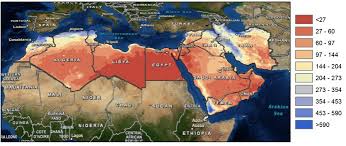
Geopolitical competition over North Africa and the Red Sea is intensifying as traditional maritime corridors face disruption, with multiple regional and international powers racing to consolidate positions at strategic chokepoints before the crisis clouds clear.
Context
The Red Sea links the Suez Canal to the Bab el-Mandeb Strait, carrying approximately 12% of global trade. Houthi disruptions in Yemen, the Sudanese war along the eastern coast, Libyan chaos to the northwest, and Gulf strikes to the east — all converge to reshape global shipping and trade maps in ways unseen for decades.
Geopolitical Dimension: The Contest for Influence
Turkey is reinforcing its military and economic presence in Libya and seeking a foothold in the Horn of Africa. The UAE holds bases and ports at several strategic points along the Red Sea and the Horn. Russia is seeking a naval base in Sudan on the Red Sea. China holds its only overseas military base in Djibouti and is expanding port investments across Africa. The United States is recalibrating its security priorities across the region in the light of rapidly accelerating developments.
Economic Dimension
Disruption of traditional corridors raises the strategic value of North Africa as a logistical alternative. Egypt benefits from the Suez Canal but simultaneously faces acute economic pressures. Libya — despite its chaos — holds vast oil resources and an irreplaceable geographic position. African ports on the Red Sea have become the focus of intensifying investment competition.
Security Dimension
The growing multi-power naval presence in the Red Sea raises the risk of unintended incidents. Libya remains an arena of external power rivalry, with competing foreign actors supporting different armed factions. Any new security agreement in the region will redraw the map of alliances with long-range consequences.
Diplomatic Dimension
Negotiations over ports, bases, and economic concessions are being conducted behind closed doors. African states face difficult strategic choices in a time of intensifying great-power competition, with limited tools to shape outcomes that will deeply affect them.
30–90 Day Assessment
- New port and security base agreements to be signed in the region
- Escalating Turkish-Emirati competition in East Africa and Libya
Early Warning Indicators
- Announcement of a new foreign military base on the Red Sea
- Major port deals between Gulf states and North African governments
- Any naval military escalation at the Bab el-Mandeb Strait