
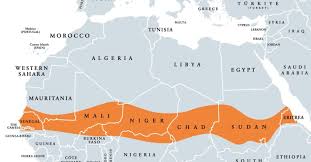
What happened?
Armed extremist groups continue to expand their geographic foothold across the Sahel — stretching from Mauritania to Sudan — exploiting the retreat of Western military presence and the failure of replacement security arrangements to fill the vacuum.
Context
The Sahel crisis was not born today. It is the product of decades of failure to build states that absorb their societies, distribute wealth with equity, and legitimately monopolize violence. French intervention through Operation Barkhane delayed the collapse but did not treat its causes. The military coups in Mali, Burkina Faso, and Niger came in part as popular reactions to the failure of civilian elites and their inability to deliver security — but they have deepened the problem rather than solved it.
Military Dimension
Armed groups — particularly Jama’at Nusrat al-Islam wal-Muslimin (JNIM) and the Islamic State in the Greater Sahara (ISGS) — have expanded geographically and now effectively control vast stretches of territory, levying ‘taxes’ on populations and traders. Government security forces in the three major countries (Mali, Burkina Faso, Niger) suffer from serious deficiencies in training, equipment, and morale. The partnership with the Russian Wagner Group/Africa Corps has not fundamentally changed the security equation and has introduced additional human rights complications.
Humanitarian Dimension
Millions of displaced people in a region that now hosts one of the world’s largest displacement crises. Rural communities pay the highest human price: their inability to farm, raise livestock, and access markets translates into accelerating hunger. Humanitarian organizations are operating under extreme security conditions, and some have been compelled to suspend operations across large areas.
Diplomatic & International Security Dimension
The withdrawal of French and American forces from parts of the Sahel has created a vacuum that no effective alternative power has filled. Europe is anxious about the Sahel becoming a migration corridor feeding its internal political tensions. Niger’s 2023 coup and the expulsion of U.S. forces have significantly reduced Western intelligence and military tools in the region.
30–90 Day Assessment
- Continued deterioration with no turning point visible on the near horizon
- Risk of armed group expansion toward Gulf of Guinea states — Benin, Ghana, Togo
Early Warning Indicators
- Major attacks in capitals or key cities not previously targeted
- Collapse of the G5 Sahel Joint Force or what remains of it
- Accelerating migration waves toward Atlantic coastal states