
What’s the News?
In January 2026, President Donald Trump has made a high-stakes return to the center of the Nile dispute, positioning himself as the ultimate mediator to break the decade-long deadlock over the Grand Ethiopian Renaissance Dam (GERD).
Following his return to the White House, Trump has reignited his involvement in the Horn of Africa, framing the water crisis as a “solvable” deal that requires his personal brand of “strongman diplomacy.”
- The January 16 Letter: Trump sent a formal letter to Egyptian President Abdel Fattah el-Sisi, pledging to “responsibly resolve” the Nile water-sharing issue. This move has been welcomed by Cairo and Khartoum but met with wary silence from Addis Ababa.
- The Core Trade-off: The U.S. proposal focuses on a “water-for-energy” bargain. It aims to guarantee predictable water releases for Egypt and Sudan during droughts, in exchange for international support for Ethiopia to become the “powerhouse of Africa” through electricity exports.
- A “Peace Board” Strategy: Reports suggest Trump is integrating the GERD talks into a broader regional strategy, potentially linking the resolution to other high-priority issues, such as the stabilization of Gaza and Red Sea maritime security.
Brief Background
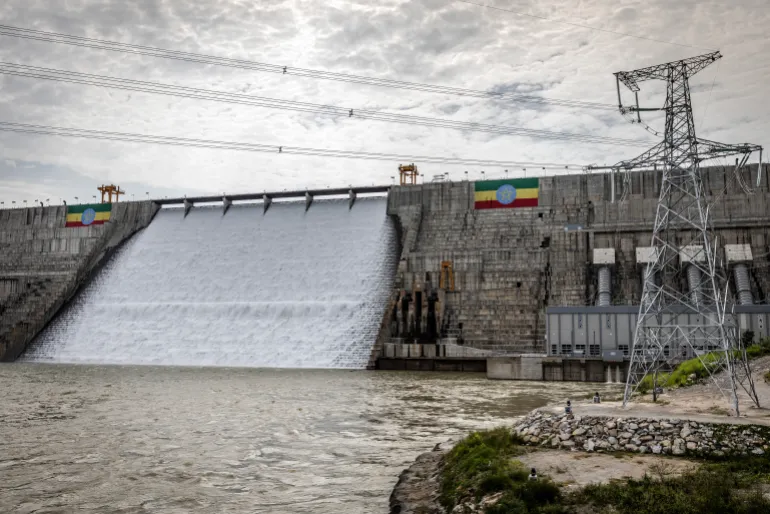
The trilateral negotiation track on the Renaissance Dam has stalled for years, despite repeated African mediation attempts. For Ethiopia, the dam represents a strategic development project for power generation, while Egypt considers it an existential threat to its water security, and Sudan’s position wavers between interests and concerns. The failure to reach a binding legal agreement on filling and operation rules has led to intermittent diplomatic escalation and near-complete dialogue deadlock.
Why Does It Matter?
American Repositioning: The Trump administration seeks to restore the role of central mediator in a long-term strategic crisis, leveraging its bilateral relations with conflict parties and its desire to strengthen its influence in the Horn of Africa against Chinese and Russian expansion.
Breaking the Deadlock Logic: The American initiative attempts to create new political ground that transcends the failure of regional mediation mechanisms, focusing on a pragmatic approach balancing Ethiopian sovereignty and Egyptian water security.
Regional Security: The initiative’s success could prevent the crisis from deteriorating into potential military confrontation and open prospects for regional cooperation on other files intersecting with Horn of Africa stability.
Implications
Near Term:
- Possibility of resuming trilateral negotiations with active American mediation
- Reassuring Addis Ababa regarding its sovereignty in exchange for concrete guarantees for Cairo
- Reintroducing the file into the American foreign policy agenda in the region
Potential Risks:
- Initiative failure may deepen trust crisis among parties
- Absence of clear implementation mechanisms turns initiative into mere political messaging
- Sudanese complications (civil war and state collapse) weaken effectiveness of any trilateral negotiation track
Decisive Factors:
- Ethiopia’s willingness to engage in serious dialogue producing a binding legal agreement
- Washington’s ability to maintain neutrality and avoid bias toward one party over another
- Overcoming Ethiopian historical suspicions toward the American role in the file
What to Watch?
American Diplomacy:
- Initiative details and proposed implementation mechanisms
- Level of direct American engagement in negotiations
- Coordination with African Union and United Nations
Regional Reactions:
- Official Egyptian position on the initiative and Cairo’s readiness to participate
- Addis Ababa’s response and conditions for engaging in a new track
- Sudan’s ability to participate effectively despite its internal crisis
Field Developments:
- Ethiopian actual filling and operation policies for the dam
- Any diplomatic escalation or recourse to international forums
- Possibilities of military escalation if diplomatic track fails
Broader Context:
- Initiative’s impact on international influence balances in the Horn of Africa
- Position of other international actors (China, Russia, European Union)
- File’s connection to other regional issues (Red Sea, Somalia, Eritrea)
Conclusion: Trump’s initiative represents an opportunity to reopen a closed political window, but its success depends on translating it into clear and binding mechanisms that address the core of the dispute as a development and regional security issue, not merely crisis management. Failure to do so will make it another station in the record of missed opportunities.