
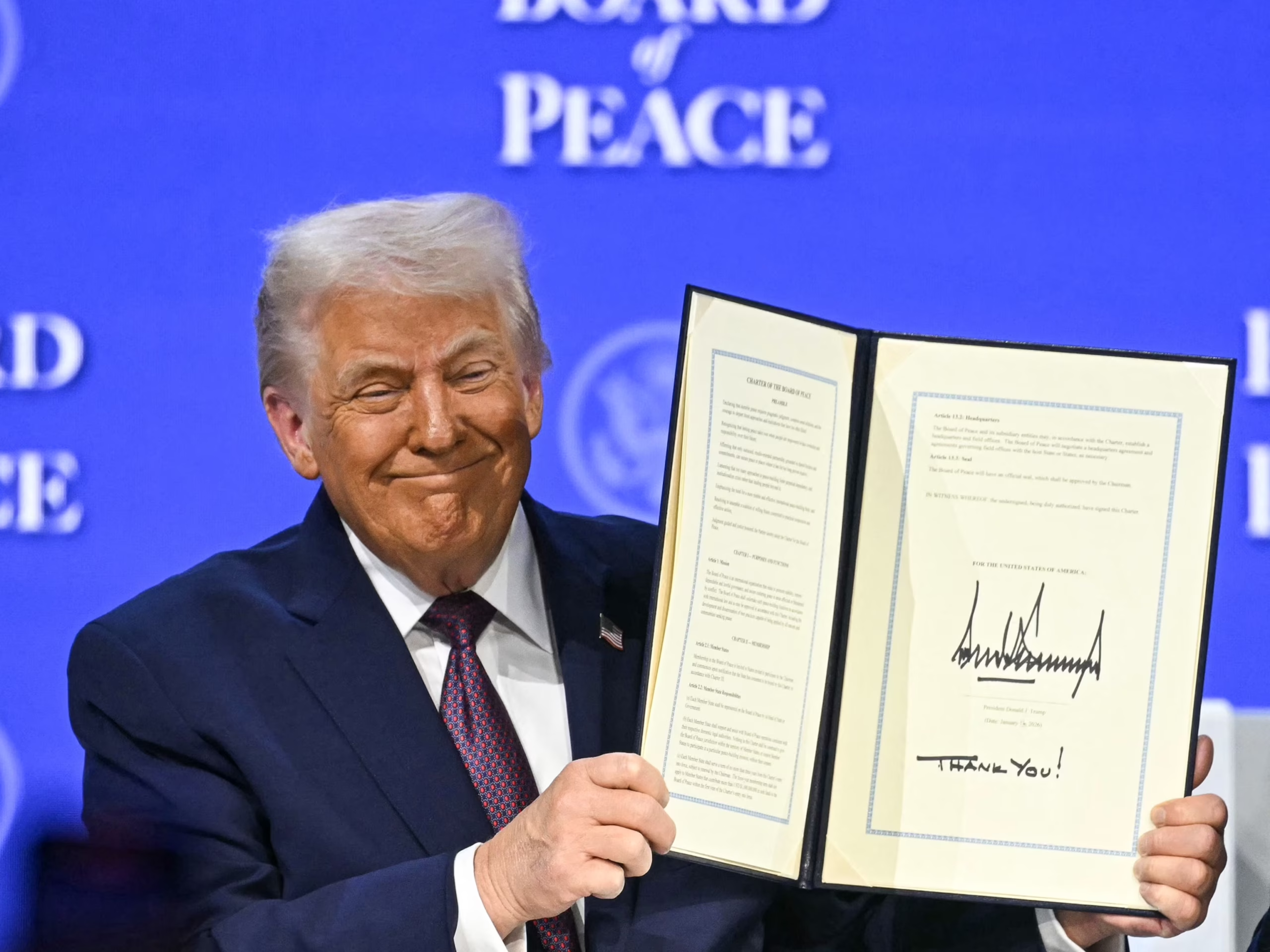
In a move that may reshape the equations of multilateral diplomacy, nine countries—Saudi Arabia, Egypt, Turkey, Jordan, the UAE, Qatar, Indonesia, Pakistan, and Kuwait—announced their acceptance of US President Donald Trump’s invitation to join the “Peace Council,” an initiative ostensibly aimed at resolving global conflicts but raising fundamental questions about the future of the UN-based international order.
Geopolitical Composition: A Selective, US-Led Alliance
The Council’s initial makeup reveals a clear American strategy to mobilize key regional allies, with notable focus on major Sunni Muslim powers. The absence of Iran, China, and Russia—powers challenging American hegemony—is no coincidence, but rather reflects Trump’s vision for a parallel diplomatic mechanism that excludes geopolitical adversaries and diminishes the Russian-Chinese veto power that often blocks Washington’s initiatives in the UN Security Council.
The Institutional Threat to the United Nations
Diplomatic concerns that this initiative “may harm the work of the United Nations” are not an exaggeration. Recent history shows that parallel mechanisms—from the “coalitions of the willing” in the 2003 Iraq invasion to unilateral interventions—typically weaken organized multilateral frameworks. The Peace Council threatens to create a new pattern:
Institutional Double Standards: When major powers choose selective forums to resolve conflicts, they send a message that the United Nations—an organization comprising 193 countries with the principle of sovereign equality—is inadequate or ineffective. This undermines the international legitimacy derived from universal membership.
Erosion of the Security Council: If the Peace Council succeeds in mediating any major conflict, it will set a precedent for bypassing the UN Security Council, which under the UN Charter holds “primary responsibility for the maintenance of international peace and security.” This opens the door to a proliferation of parallel councils and alliances, each claiming legitimacy in conflict resolution.
Selective Jurisdiction: The Peace Council is unlikely to address conflicts that embarrass its principal members—such as violations in Egypt’s Sinai, repression in Xinjiang, or Turkish policies toward the Kurds. This creates a two-tier system: conflicts “deserving” of international attention, and others excluded according to geopolitical interests.
Expected Scenarios
Scenario One – Institutional Competition: The UN and Peace Council enter direct competition over any major upcoming crisis. If the Council achieves a diplomatic breakthrough—however limited—while the UN fails, this may encourage other countries to establish parallel mechanisms (a Chinese-led Asian peace council, an African Union-led African one, etc.), fragmenting the international system into competing regional blocs.
Scenario Two – Tactical Absorption: The UN incorporates the Peace Council as a complementary mechanism—similar to what happened with the African Union in some conflicts—but this requires Russian and Chinese consent, which is unlikely, especially if Beijing and Moscow view the Council as a tool to contain them.
Scenario Three – Early Failure: If the Council faces fundamental disagreements among its members (such as Saudi-Turkish tensions or historical Egyptian-Qatari disputes), it may collapse before achieving any tangible accomplishment, thereby reinforcing the UN’s position as the “least bad” option despite its flaws.
Scenario Four – Selective Specialization: The Council focuses on specific issues (such as counterterrorism or the Palestinian crisis under American-Israeli terms), while the UN remains the primary forum for other conflicts. This may create a de facto division of labor, but it entrenches double standards.
Toward a Fragmented International Order?
The Peace Council represents an embodiment of a growing American tendency to reshape the international order according to Trump’s transactional-selective vision, where multilateral diplomacy becomes “deals” struck between “chosen partners” rather than collective commitments under a UN umbrella. If this formula succeeds, we may witness a decade of international institutional fragmentation—an era governed not by the UN alone, but by a network of competing councils and alliances, each reflecting regional power balances more than universal principles. This is not necessarily the end of the international order, but it is certainly a shift toward a less inclusive and more fragmented version of it.