
The News Hours before the Berlin Conference convenes on April 15, Port Sudan’s authorities adopted an unprecedented escalatory posture: sending a formal note to Germany declaring the conference’s convening without their participation a “violation of international law,” and conducting a series of meetings in Geneva with the heads of major humanitarian organizations to demand a boycott. The conference — backed by the Quintet and Quad mechanisms — targets 41 civilian and independent Sudanese figures to mobilize humanitarian funding and advance a civilian political track. Al Jazeera Net obtained the draft final document calling for “a political process led by civilian forces with exclusive Sudanese ownership.” Meanwhile, American analysts documented the rising influence of Sudan’s Muslim Brotherhood within military and security institutions as a primary factor in prolonging the war and obstructing ceasefire efforts.
Why It Matters to America Berlin is a real test of the West’s capacity to build a political track parallel to the warring military factions. Washington is listed as a partner within the Quad mechanism sponsoring the conference — meaning it is a direct stakeholder in any success or failure. American analysts’ warnings about Brotherhood networks inside state institutions mean that the designated terrorist organization — the Islamic Movement — may be operating government agencies that would be counterparties in any future negotiations.
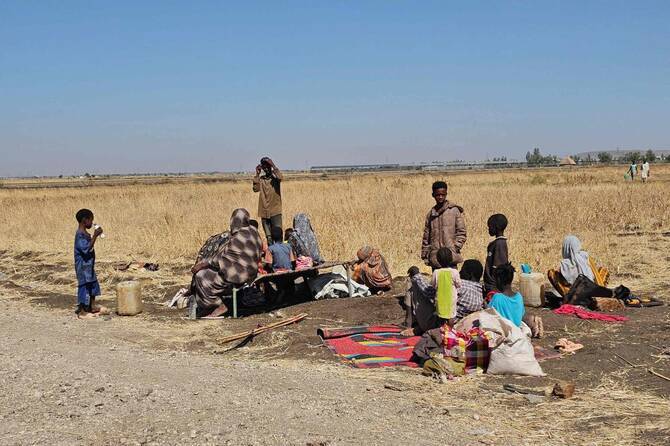
Consequences Port Sudan’s rejection of the conference is not a constitutional position — it is a tactic to block any settlement that excludes the Islamic Movement from the post-war political landscape. The humanitarian figures that escalated at the moment of the conference’s convening — 33 million in need of assistance, 14 million displaced, 17 million children at risk — place the international community before a moral and political obligation that cannot be deferred. UNICEF’s 84% funding gap reflects genuine international fatigue in financing the world’s longest humanitarian crisis.
Scenarios
- Berlin Produces a Breakthrough: Civilian forces succeed in crafting a unified appeal and mobilizing substantial humanitarian funding, giving the civilian political track enough momentum to pressure the military parties.
- Berlin Becomes a Failed Symbol: Divisions deepen among the invited civilian forces, and the military and Brotherhood exploit the boycott as a pretext to undermine any international consensus on a settlement track.
- Berlin Reshapes the Funding Map: Even absent a political agreement, the conference channels an international humanitarian surge that eases field pressure and reduces the warring parties’ mobilization capacity.