
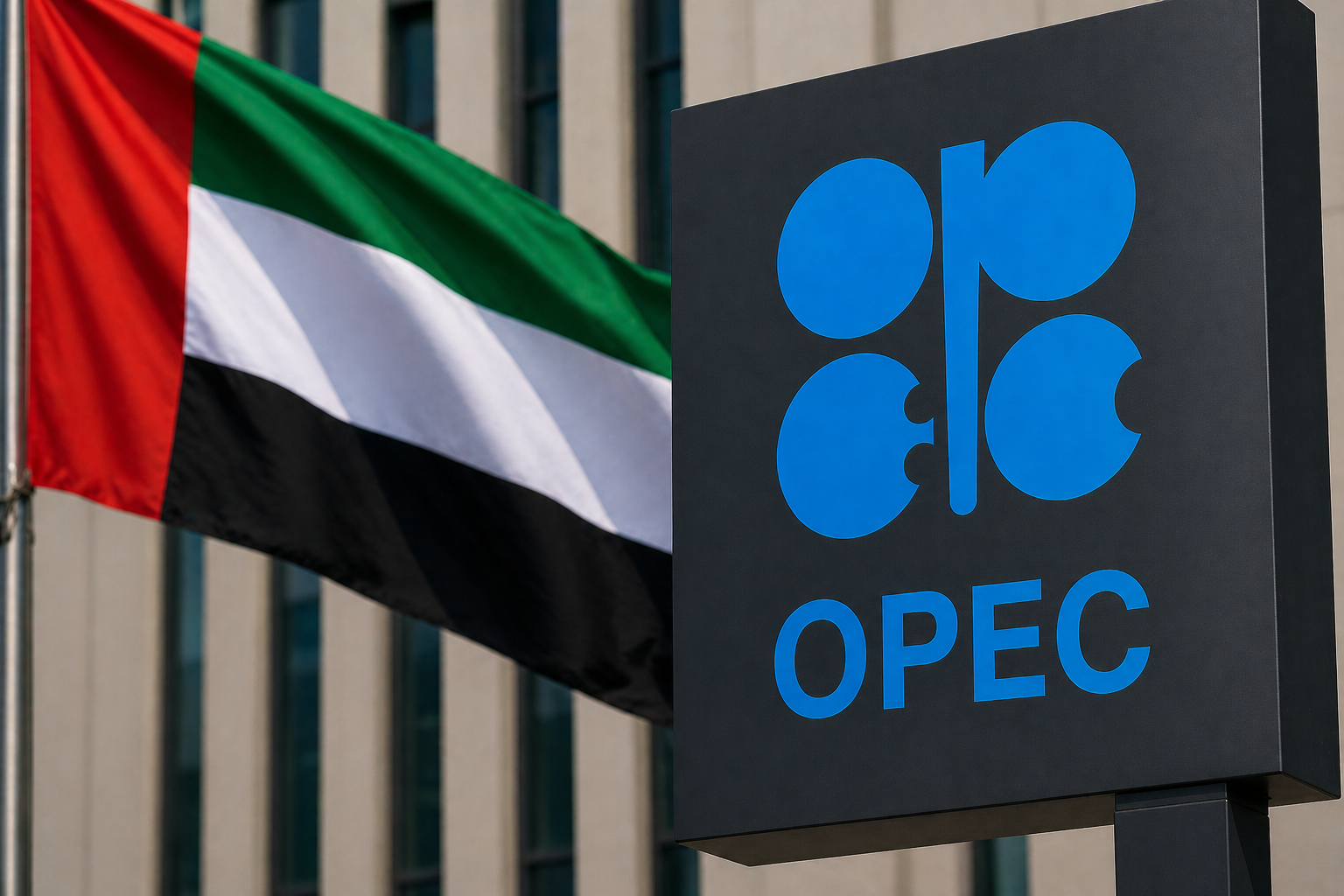
The News: The United Arab Emirates announced through its state news agency WAM its formal withdrawal from OPEC and the OPEC+ alliance, effective May 1, 2026. The announcement came on the same day OPEC was preparing to convene in Vienna — a pointed political message whose significance is hard to miss. The UAE will begin gradually ramping up oil production from 3.4 million barrels per day toward 5 million barrels by 2027, against the backdrop of a non-oil economy that now accounts for roughly 75% of GDP. The UAE is a founding member of the organization, having joined in 1967 through the Emirate of Abu Dhabi — four years before the federation itself was established.
The Qatari Precedent: The UAE is not the first Gulf state down this path. Qatar preceded it, announcing its withdrawal from OPEC in December 2018, citing its identity as a gas-first producer — through QatarEnergy — as incompatible with membership in an oil-focused organization that no longer reflected its true weight in global energy markets. That decision freed Doha to scale its LNG ambitions without coordination constraints, and Qatar has since become one of the world’s foremost suppliers. Bahrain and Oman, for their part, were never OPEC members, though both have remained broadly aligned with the group’s supply management efforts.
Why This Matters to America: The UAE’s withdrawal is a direct win for the Trump administration, which has long accused OPEC of “ripping off the rest of the world” and has explicitly tied U.S. military support for Gulf states to oil price levels. It strengthens Washington’s push to bring energy prices down globally in the post-Hormuz closure era, and hands the administration additional leverage against Riyadh, which has led the production-cut strategy within the group.
Consequences: The withdrawal lands as a serious blow to the organization and its de facto leader, Saudi Arabia, which has now lost a pivotal Gulf ally at a deeply sensitive moment. The Iran war wiped out more than 7.88 million barrels per day of OPEC’s output in March — the largest supply collapse in the group’s modern history, surpassing the Covid-era cuts, the 1970s oil crisis, and the 1991 Gulf War. Compounding matters, UAE Presidential Diplomatic Adviser Anwar Gargash publicly criticized Gulf and Arab states for what he called their “historically weakest” response to Iranian attacks on the Emirates, exposing the depth of the Gulf-on-Gulf fracture in the post-war period.
Three Scenarios:
- Scenario One — Gradual Disintegration: Other Gulf states with surplus production capacity — Kuwait among them — follow the Emirati and Qatari example, reducing OPEC to a symbolic structure that loses its coordination effectiveness within 12 to 18 months.
- Scenario Two — Saudi Restructuring: Riyadh absorbs the blow and reshapes OPEC+ into a narrower bilateral framework anchored by Russia and Iraq, attempting to preserve price influence despite a diminished market share.
- Scenario Three — A New Price War: The UAE’s production ramp-up in a market already destabilized by the loss of Iranian supply triggers sharp price volatility, disrupting regional reconstruction plans and deepening fiscal crises in more vulnerable producer states such as Iraq and Algeria.
What to Watch: Riyadh’s official response to the UAE withdrawal, and whether the Vienna meetings produce any adjustment or freeze to production quotas. Statements from UAE Energy Minister Suhail Al Mazrouei on the production ceiling targeted once the withdrawal takes effect. And oil futures market reactions at the open.