
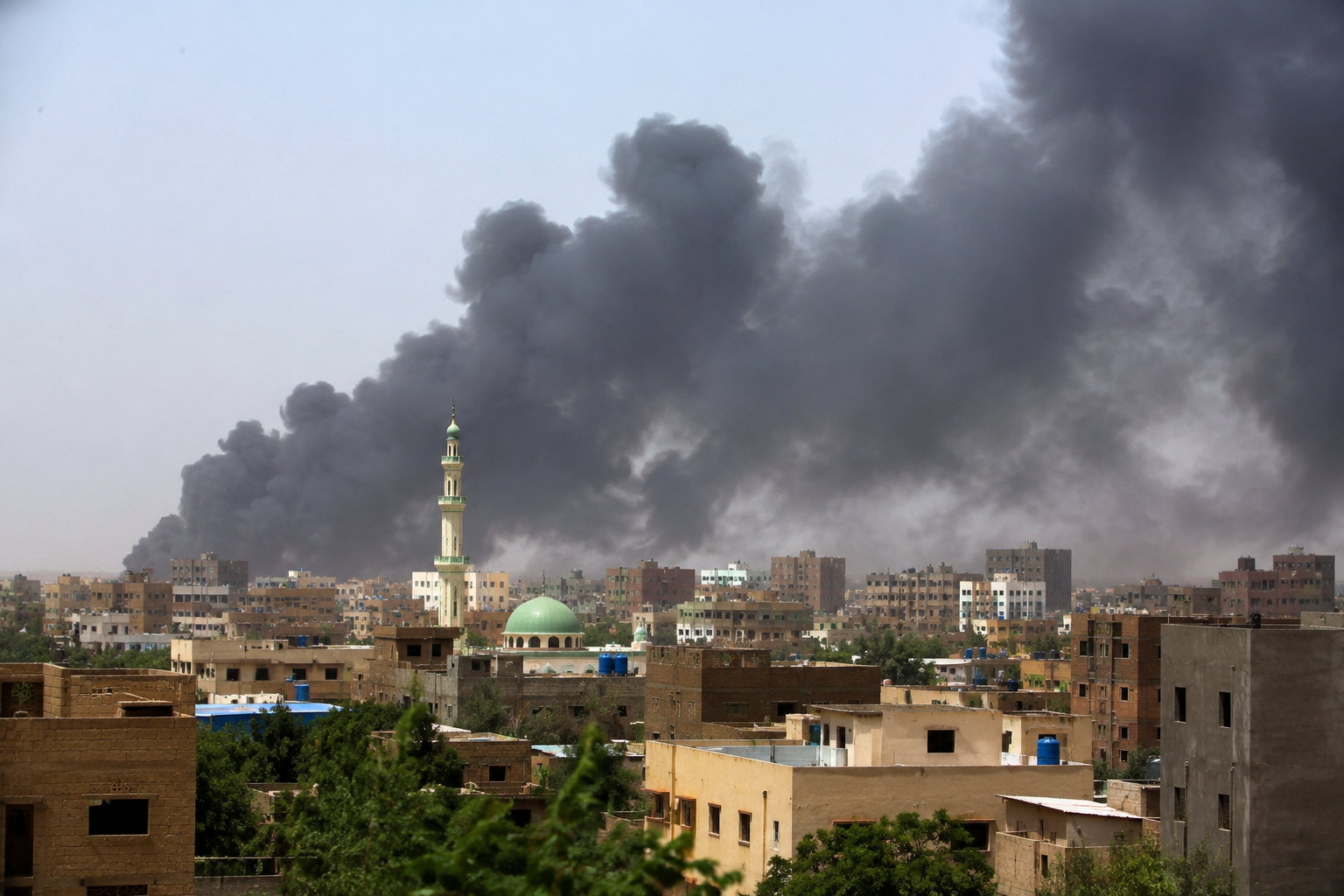
The News Political forces, international organizations, and regional actors have launched new initiatives to resolve Sudan’s crisis, now entering its fourth year. In Nairobi, forces including the Sumoud coalition led by Abdalla Hamdok and the Baath Party endorsed a “Sudanese Declaration of Principles” and a roadmap to end the war, setting long-term goals: a comprehensive peace agreement, a transitional constitution, and a unified national security architecture that would absorb all militias. Sumoud spokesman Jaafar Hassan Othman confirmed that the Nairobi meetings reached broad consensus on the necessity of ending the war, warning that any military ceasefire not linked to a comprehensive political track risks entrenching division rather than resolving it. Meanwhile, UN Envoy Pekka Haavisto acknowledged that the two major obstacles remain: ceasefire guarantees and the “day after” scenario.
Why This Matters to America Sudan is not merely a humanitarian crisis — it is a test of the entire international system’s credibility. Washington has a stake in Sudan from three angles: preventing it from becoming a permanent failed state on the Red Sea, containing the Russian and Iranian influence filling the vacuum, and managing a humanitarian catastrophe involving some 13 million displaced persons. The Berlin Conference in April 2026 laid out broad principles aligned with U.S. positions: Sudanese unity, a halt to external support, and an inclusive civilian transition. But implementation remains without effective American stewardship.
Implications The current momentum differs qualitatively from previous rounds of negotiation: the conversation has shifted from a “ceasefire” in the narrow military sense to post-ceasefire arrangements. But the core deadlock remains unresolved: the SAF insists on RSF withdrawal from urban areas and disarmament before any serious talks, while the RSF refuses the one-state, one-army principle without prior acceptance of its own terms. Most dangerously, the flow of arms and external financing continues — the very dynamic that has collapsed every previous ceasefire