
The News
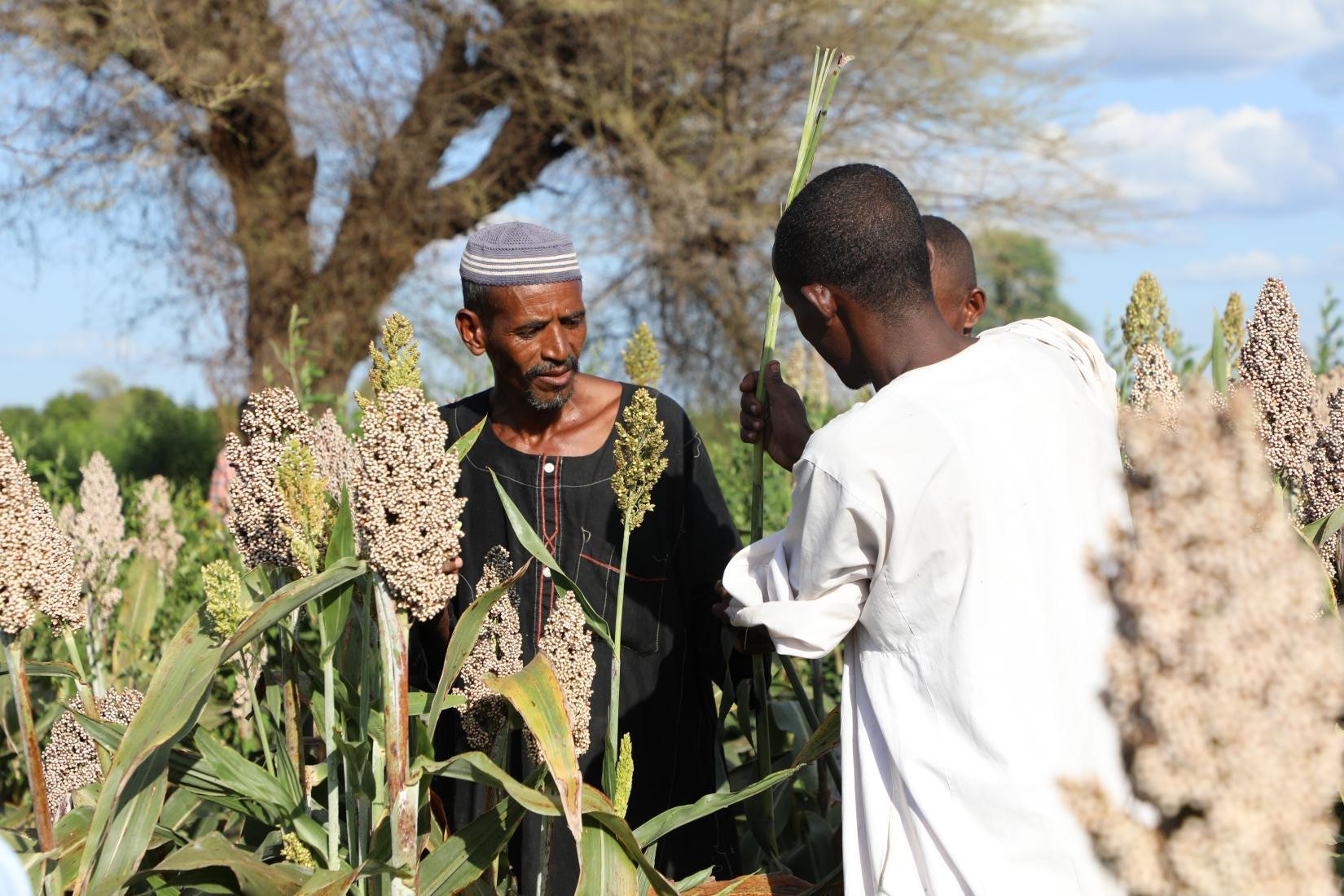
A Reuters report filed today from Omdurman reveals that farmers across multiple Sudanese regions have decided to cut back their planted acreage this summer due to the sharp rise in fuel and fertilizer costs triggered by the US-Iran war — threatening food production in a country already gripped by acute hunger. The crops facing the deepest cutbacks are sorghum, millet, wheat, and sesame — the backbone of Sudan’s food security and its leading agricultural exports.
Background
Sudan is entering this crisis from a position of extreme structural vulnerability on three simultaneous fronts: a devastating civil war between the Sudanese Armed Forces and the Rapid Support Forces now in its third year; the near-total collapse of the banking sector and the Agricultural Bank of Sudan; and a deep structural dependence on the Gulf for production inputs — Sudan imports more than half of its fertilizer needs from Gulf states according to UN data, and relies entirely on imported fuel after years of war knocked out its domestic energy production. National cereal output had already fallen by a quarter from pre-war averages according to the FAO — before the Hormuz crisis added new pressure on top of wounds that were never allowed to heal.
The Causes
First — The double price shock: Fertilizer and fuel prices spiked sharply following the closure of the Strait of Hormuz, through which a third of the world’s seaborne fertilizer trade passes. The impact is immediate and stark: “Two sacks of wheat buy you one sack of urea — so we won’t grow it again,” one farmer told Reuters.
Second — The collapse of agricultural finance: The Agricultural Bank of Sudan, meant to support farmers, has itself been gutted by the war — pricing inputs too high and buying crops too low, pushing farmers into debt rather than production.
Third — A closing window: The FAO projects a window of no more than three months to act before risks to 2026 planting decisions escalate significantly. A lost season will not simply repeat — it will compound on top of a season already destroyed.
Implications
- Humanitarianly: Roughly 19.5 million people — more than 40% of the population — are already living at crisis levels of hunger according to the UN-backed monitor, with some areas on the edge of actual famine. Cutting back the planting season means this figure is likely to rise in the final quarter of 2026.
- Economically: The blow falls hardest on sesame — Sudan’s top export crop — further squeezing an already scarce supply of foreign currency.
- Logistically: Emergency shipping surcharges through the Dubai hub have reached $3,000 per container, raising the cost of humanitarian aid itself at precisely the moment when aid budgets are shrinking globally.
- Strategically: The Iran war did not create Sudan’s crisis — but it is accelerating it, deepening it, and narrowing the window for any intervention that could stop it.
Why This Matters to the United States
This development exposes an indirect consequence of the Iran war that has not received adequate attention in Washington: the cascading impact of the Hormuz crisis on food security across sub-Saharan Africa. Sudan is not an isolated case — a third of the world’s seaborne fertilizer trade passes through Hormuz, meaning any prolonged disruption to the strait automatically translates into an agricultural crisis in fragile states that depend on those imports. Washington has a dual interest: a humanitarian one in averting a large-scale famine that would demand a costly international response in a country already at war with itself; and a strategic one in preventing a food collapse that deepens Sudan’s chaos and opens the door to expanded Russian or Iranian influence in a desperate environment.
Assessment
Major wars do not end at their immediate borders — Hormuz may lie thousands of miles from Sudan’s sorghum fields, but global supply chains have made distance an illusion. Sudan embodies what might be called the “compounded victim”: a country already suffering a devastating internal war, now hit by a regional conflict that doubles the cost of survival for its farmers and closes the door on the coming season.
The deeper danger is not the single lost harvest — it is the cumulative logic: a lost season piled on top of a destroyed season, hunger compounded upon hunger, in a country whose institutions, reserves, and social safety nets have all been depleted. Sudan’s food crisis is no longer an emergency that can be contained with an aid package — it has become the predictable outcome of three failing systems converging at once: a collapsed internal security order, a disrupted global trading system, and a deteriorated agricultural governance structure. If this convergence is not addressed in any future Hormuz negotiations, or in the framing of an international response to Sudan, then 2027 may arrive carrying a food crisis that no one will be prepared to face.