
The News
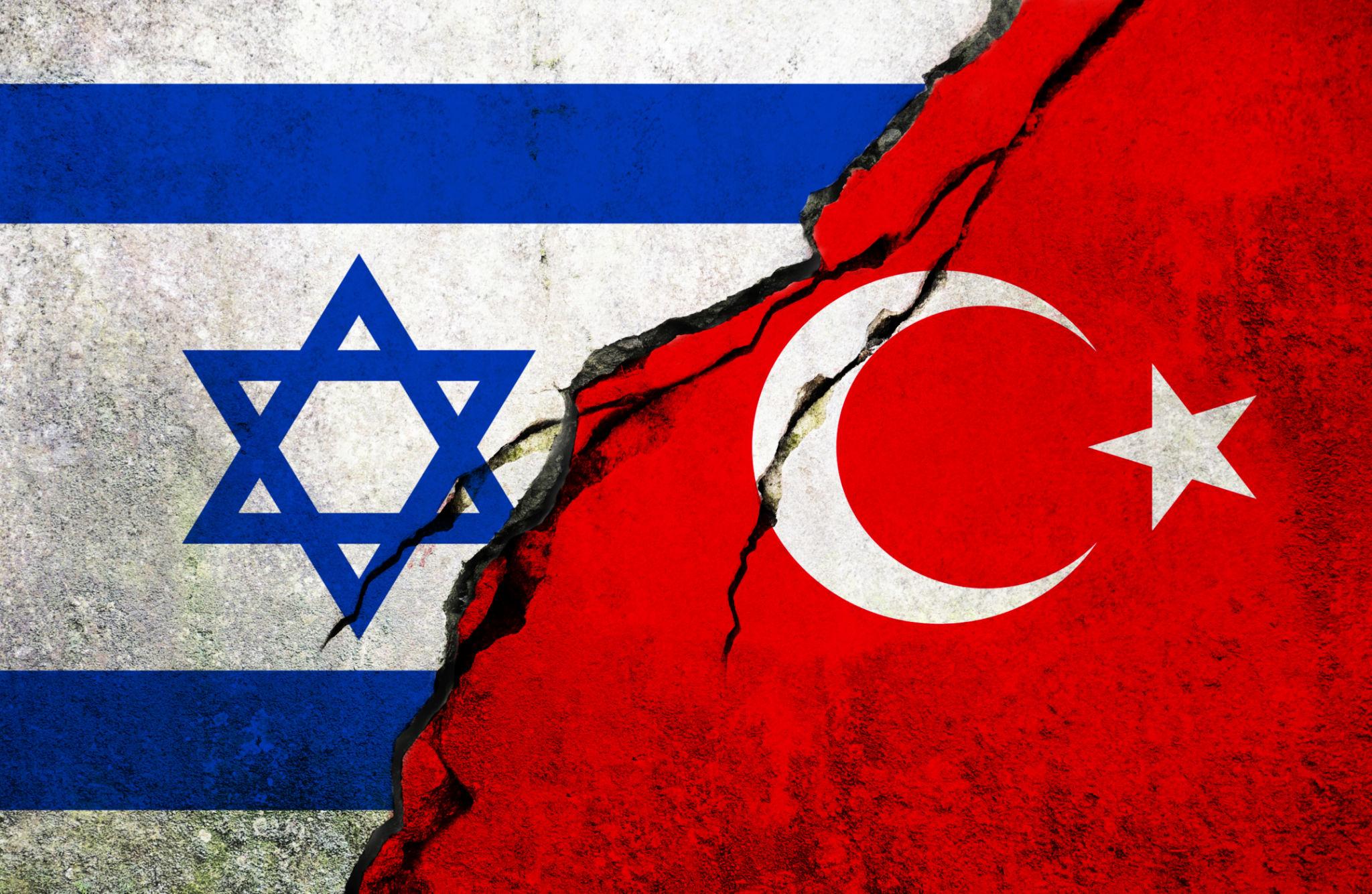
Israeli and Turkish leaders have engaged in an unprecedented exchange of attacks on social media. On April 11, Israeli Prime Minister Benjamin Netanyahu accused Turkish President Recep Tayyip Erdogan of “massacring his own Kurdish citizens,” “accommodating Iran’s terror regime and its proxies,” and undermining regional stability. Turkish Foreign Minister Hakan Fidan accused Israel of deliberately seeking to portray Turkey as its next enemy, stating that Netanyahu is working to “undermine ongoing peace negotiations” as part of his continued “expansionist policies.”
In the most explicit escalation yet, Erdogan declared at the International Asia-Political Parties Conference in Istanbul on April 12, 2026: “Just as we entered Karabakh, just as we entered Libya, we will do the same to them” — in an unmistakable reference to Israel. This marks the first explicit presidential-level Turkish threat of potential military intervention against Israel.
These exchanges came in the wake of a bombshell announcement in Tel Aviv: Istanbul’s chief prosecutor indicted Prime Minister Netanyahu and approximately 35 other Israeli officials, including Defense Minister Israel Katz, Finance Minister Bezalel Smotrich, former Defense Minister Yoav Gallant, National Security Minister Itamar Ben Gvir, IDF Chief of Staff Eyal Zamir, and former Mossad Director Yossi Cohen. The charges relate to the Israeli Navy’s interception of dozens of ships belonging to the Global Sumud Flotilla, which sought to deliver humanitarian aid to Gaza in early October 2025. The prosecution is seeking sentences of up to 4,596 years in prison. (Turkish Minute / Jerusalem Post, April 2026)
Background
The current tensions between Turkey and Israel stem primarily from the fallout of the Gaza war. Ankara adopted a staunchly pro-Palestinian stance and harshly criticized the Netanyahu government’s policies, while Tel Aviv viewed these positions as biased and dismissive of Hamas’s threats. The escalation is also fueled by a broader rivalry over regional influence, particularly as Israel accuses Turkey of aligning with Iran, while Ankara sees Israel as actively working to undermine de-escalation efforts. Domestic politics play a significant role as well: both Erdogan and Netanyahu are deploying sharp rhetoric to consolidate their political standing at home and internationally.
Causes
Turkey-Israel relations are in a state of sustained deterioration, gradually hardening into a long-term strategic rivalry. The dispute is no longer limited to circumstantial disagreements — it has become tied to deeper questions of regional influence and geopolitical competition across the Middle East. As crises multiply and political rhetoric intensifies, the relationship appears to be trending toward greater complexity rather than a return to stability.
- As Iran’s capabilities have been degraded by U.S.-Israeli military operations, Israeli officials increasingly view Turkey as “the next major challenge” to their country’s regional dominance. Prominent Israeli leaders such as former Prime Minister Naftali Bennett have explicitly described Turkey as “the next strategic threat.” (su.se, March 2026)
- Despite its rivalry with Iran, Turkey has consistently signaled that it prefers the survival of the Iranian regime over its collapse. A weakened or fragmented Iran could destabilize the region — but it would also eliminate a key counterweight to Israel. (fdd.org, April 2026)
- Turkey has displayed ongoing sympathy toward Hezbollah, Yemen, and Sudan, where Israel appears to be quietly backing UAE-aligned efforts while Turkey supports Saudi-aligned forces. (tfiglobalnews, April 2026)
- Erdogan escalated rhetoric to an unprecedented level on April 12, 2026, declaring: “Just as we entered Karabakh, just as we entered Libya, we will do the same to them” — making it the first explicit presidential threat of potential Turkish military intervention against Israel. (Jerusalem Post, April 2026)
The growing divide extends well beyond Gaza — multiple geopolitical arenas are amplifying the tension:
- Syria: Both countries are deeply engaged, but with conflicting priorities. Turkey focuses on Kurdish groups and border security, while Israel targets Iranian influence and Hezbollah activity. This overlap increases the risk of accidental military clashes.
- Eastern Mediterranean: Disputes over energy resources and maritime boundaries have intensified the rivalry. Turkey opposes regional alliances that exclude it, while Israel is deepening ties with partners — especially Greece and Cyprus — that can balance Ankara’s influence.
- The Kurdish Question: Turkey views armed Kurdish groups, particularly the PKK, as an existential threat. Any foreign support perceived as backing Kurdish elements — real or rumored — is liable to provoke a sharp reaction from Ankara. (tfiglobalnews, April 2026)
Note: Domestic conditions are visibly shaping foreign policy. Turkey is navigating severe economic difficulties, including high inflation and rising social tensions, while Israel faces ongoing political and security crises. In such contexts, external escalation can be instrumentalized to shore up political power at home. Hardline rhetoric and assertive foreign moves tend to generate popular support, even when they carry heightened international risks.
Implications
The escalating Turkey-Israel tensions are contributing to greater instability across the Middle East and widening the theater of regional conflict, particularly given the ongoing wars in Gaza and Syria. The escalation is also hampering mediation efforts and diplomatic negotiations. Economic and trade cooperation may be negatively affected through eroding trust and indirect restrictions on bilateral ties. Finally, the tensions are deepening domestic and regional polarization, as both sides exploit the conflict to strengthen their political narratives at home and expand their external alliance networks.
- In Turkey, the prospect of a future confrontation with Israel is increasingly discussed as a real possibility to be deterred, with the underlying assumption that Israel would be the more likely party to make the first move. (Responsible Statecraft, April 2026)
- In Ankara’s reading, Syria is where the Turkey-Israel rivalry has come closest to real military clashes. Turkey and the United States have broadly agreed on giving Syria’s new government a chance, while Israel is deeply concerned about a potential expansion of Turkish influence there. (Responsible Statecraft, April 2026)
- For now, the situation remains confined to rhetoric and diplomatic maneuvering. Yet the pace and tone of these exchanges suggest that tensions are becoming more entrenched. (military.com, April 2026)
Significance for the United States
The Turkey-Israel escalation carries direct implications for the United States, as it affects the stability of its Israeli ally and strains the internal balance of NATO, of which Turkey is a member. Washington views the tensions as potentially complicating its efforts to manage the broader Middle East portfolio — particularly the Gaza war and regional de-escalation. The United States fears that this conflict could drive deeper polarization among its allies, weakening its ability to build cohesive coalitions in the region. Washington is therefore navigating the crisis cautiously, seeking to avoid fully aligning with either side while keeping communication channels open with both Ankara and Tel Aviv.
- If left unchecked, this trajectory will not only deepen the destabilization of Turkey-Israel relations, but will further complicate U.S. efforts to manage an already turbulent Middle East. (fdd.org, April 2026)
- These developments have amplified the debate in the United States over whether Turkey is becoming a rogue actor that should be expelled from NATO. (Responsible Statecraft, April 2026)
- Trump’s favorable remarks about Erdogan and his praise for the Turkish military as a strong NATO contributor have reinforced a key conclusion in Ankara: whatever room Trump may give Israel elsewhere, he does not appear to view Turkey as an adversary to be excluded from the regional balance. (Responsible Statecraft, April 2026)
Assessment
Broadly, the recent escalation between Turkey and Israel reflects a fundamental shift: what were once conventional policy disagreements have evolved into a more complex strategic rivalry rooted in competing bids for influence across the Middle East. This tension is driven by multiple overlapping files — the Gaza war, competition in Syria and the Eastern Mediterranean, and diverging positions on issues such as Iran and the Kurds. The sharp rhetoric between both leaderships — including Erdogan’s explicit threat of potential military intervention on the Libya/Karabakh model — reflects a growing tendency to instrumentalize external crises for domestic political purposes in both countries.
Despite the intensity of the rhetoric and the entanglement of Turkish and Israeli interests in Syria and the Eastern Mediterranean, the existence of indirect diplomatic channels and broader international equilibria — particularly the roles of the United States and NATO — make a full-scale war unlikely in the near term. At the same time, the risk of limited or unintended military friction remains real, especially in Syria where both sides’ field operations increasingly overlap. The most probable scenario is therefore not direct war, but a continuation of tension and political escalation, with the risk of localized, containable clashes.