
The leader of Ansar Allah (the Houthis), Abdul-Malik al-Houthi, has threatened to target any Israeli presence in the breakaway region of Somaliland by all available means, affirming that Yemen will not stand idly by in the face of any Israeli foothold in Somaliland, and will not wait for the faint-hearted.
Background
The Houthi escalation toward any potential Israeli presence in Somaliland is not separate from the Red Sea conflict but a direct extension of it. Abdul-Malik al-Houthi threatened to target any Israeli presence or foothold in Somaliland “by all available means,” in a televised speech, holding that Yemen would not stand idly by in the face of any Israeli move in that sensitive area overlooking the Gulf of Aden and Bab al-Mandab.
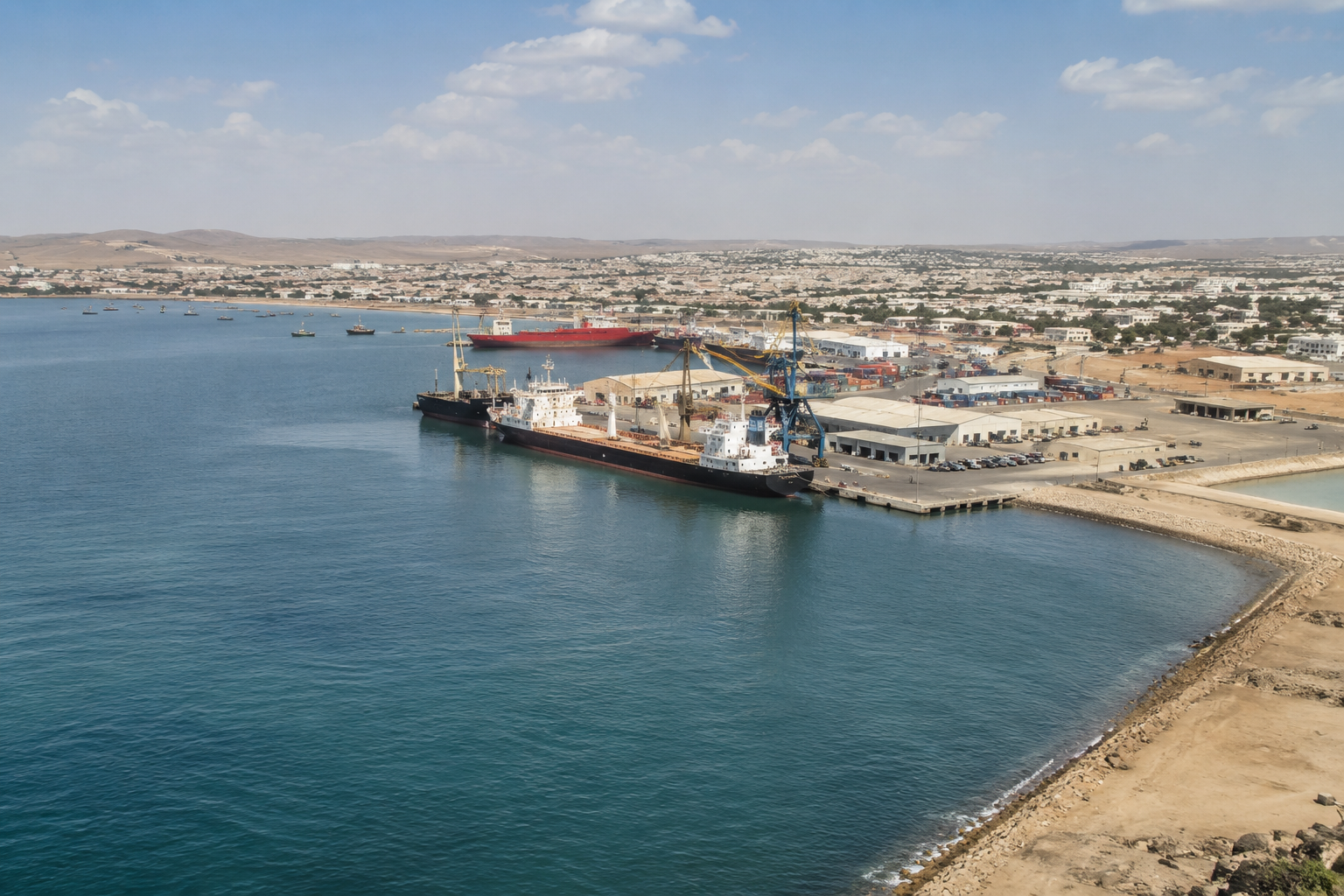
Somaliland is a region that declared its secession from Somalia in 1991 and governs itself as a de facto independent political and security entity, though it does not enjoy wide international recognition. Its importance stems not only from its ambiguous political status but from its geographic location: a long coastline on the Gulf of Aden, direct proximity to Yemen, and the port of Berbera, viewed as a promising logistics node on the trade routes between the Gulf, the Horn of Africa, and East Africa.
Why does the Houthi leader worry about Somaliland?
The Houthi concern is tied to three overlapping circles. The first is military: any Israeli intelligence or logistical presence in Berbera or its surroundings could give Tel Aviv a surveillance point close to the Yemeni coast and the Gulf of Aden, expanding its ability to monitor Houthi movements and Iran-linked maritime supplies. The second is political: Israeli recognition of Somaliland or the development of an overt relationship with it would grant the region a rare diplomatic gain and turn it into a potential security partner in the Red Sea equation. The third is propagandistic: the Houthis use this file to assert that they confront Israel not only in the Red Sea but at any point the group views as an extension of what it calls “the battle with the Israeli project.”
The paradox is that the government of Somaliland denies the existence of plans to establish an Israeli base. The region’s defense minister confirmed the existence of Israeli training for police and military personnel but denied any negotiations to set up an Israeli military base — this after reports of Israeli military or intelligence activity in the area. The denial does not eliminate the Houthi concern, but it places the file in a gray zone between limited security cooperation and a full military foothold.
The importance of Berbera and Bab al-Mandab
Berbera is no ordinary port in the region’s calculations. One of the world’s largest port operators runs operations there and has launched a shipping route connecting it to Jebel Ali, with commercial extensions toward Ethiopia, reinforcing its position as an alternative gateway for trade in the Horn of Africa. This means that any security tension around it would not be merely local but could touch Gulf, African, and international commercial interests.
Bab al-Mandab and the Gulf of Aden also constitute a vital corridor for global trade and for energy flows between Asia and Europe. The earlier Red Sea crisis showed that Houthi attacks on ships can push major companies to reroute around the Cape of Good Hope, increasing shipping time and cost and putting pressure on the Suez Canal. Estimates indicate that between 10% and 12% of global maritime trade passes through this route, so any widening of the threat front toward Somaliland would add a new layer of risk to regional trade.
The direct causes of the escalation
The first cause is the shift of the Houthi-Israeli confrontation from targeting ships and the Israeli interior to thinking about the “alternative geography” that Israel might use. The Houthis had previously announced restrictions and threats against Israeli or Israel-linked shipping in the Red Sea, in the context of the Gaza war and tensions with Iran, making any Israeli point near Yemen a symbolic and operational target in the group’s rhetoric.
The second cause is the competition over recognitions and ports in the Horn of Africa. In 2024, Ethiopia signed a memorandum of understanding with Somaliland to obtain a sea outlet, which drew wide Somali rejection as an infringement on sovereignty. With Israel entering the line of recognition or security cooperation, the region turns into an arena where Ethiopia’s ambitions, the UAE’s logistical interests, Israel’s security calculations, Somalia’s sensitivity, and the response of the Iran-backed Houthis all intersect.
Why This Matters to the United States
For Washington, the Somaliland file sits at the intersection of three priorities it cannot easily pull apart: securing the Bab al-Mandab corridor, containing Iran’s reach through its Houthi proxy, and competing with China in the Horn of Africa. The territory’s appeal is concrete — Israel became the only country to recognize Somaliland’s independence in December, and the Trump administration is reported to be weighing partial recognition in exchange for permission to build a naval base near Berbera, a trajectory underscored by AFRICOM commander Gen. Dagvin Anderson’s late-November 2025 visit to Hargeisa and tour of Berbera. Berbera offers the United States what Djibouti no longer can: a resupply and counter-Houthi operating hub that is not shared with a Chinese base next door, paired with offers of exclusive access to lithium, coltan, and other critical minerals. But the very features that make the region attractive also make it a liability the moment an Israeli or American footprint becomes visible: the Houthis have already branded any Israeli presence there a “legitimate military target,” and Israel’s recognition alone drew international condemnation and triggered an emergency UN Security Council meeting. The result is a genuine dilemma for U.S. policymakers: recognition would hand Washington a stable partner at a chokepoint through which a large share of global trade passes, but it would simultaneously import the Red Sea war into a new theater, antagonize Mogadishu and the “One Somalia” consensus, and turn any U.S.-linked facility at Berbera into a target for an Iran-backed adversary that has already shown it can disrupt global shipping at will.