
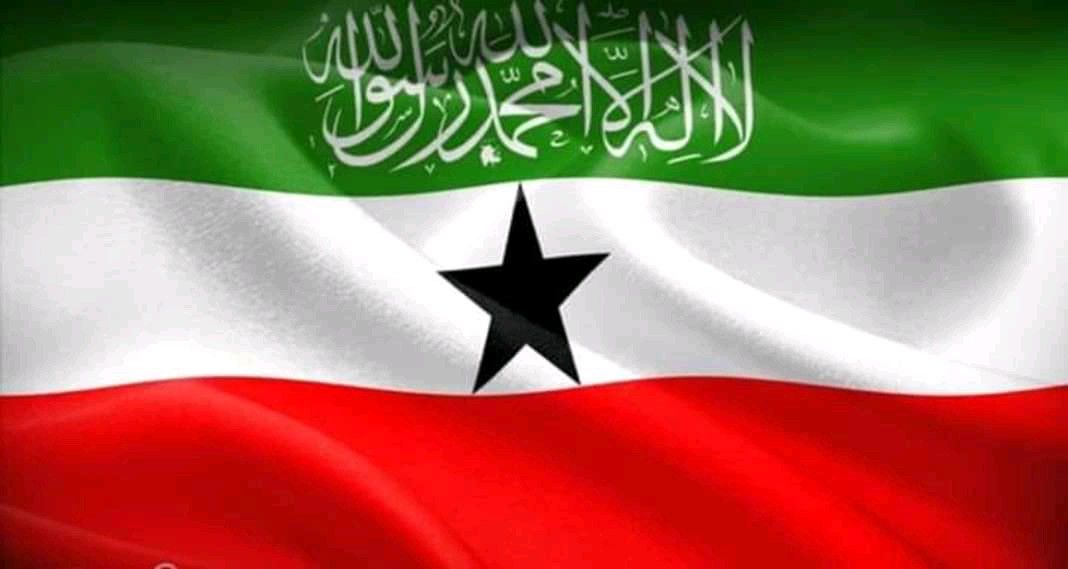
The News Israeli President Isaac Herzog received Somaliland President Abdirahman Mohamed Abdullahi (“Cirro”) at the presidential residence in Jerusalem on Sunday, June 14, 2026 — the first state visit by a Somaliland president to any country. The visit comes months after Israel became, on December 26, 2025, the first nation in the world to recognize Somaliland since it broke from Somalia in 1991. It coincided with Somaliland opening its embassy in Jerusalem — the move that detonated a broad wave of Arab and Islamic condemnation. Herzog said both countries had “acted with courage and realism,” stressing shared strategic challenges: radical extremism, regional security, and maritime freedom. Abdullahi said Israel “answered first” after Somaliland’s 35-year quest for recognition.
Significance for the United States The file tests three interlocking American priorities: Red Sea security (protecting roughly 12% of global trade and deterring the Houthis); competition with China, which holds its only overseas military base in neighboring Djibouti — with the Port of Berbera as a potential counterbalancing card; and counterterrorism against al-Shabab, ISIS, and al-Qaeda in coordination with Mogadishu.
The decisive update: the Israeli bet on pulling Washington into recognition has not just failed — it has backfired. After Trump’s initial coolness (“Does anyone know what Somaliland actually is?” and “everything is under study”), the State Department in June 2026 issued a report to Congress describing Somaliland as a “region of Somalia” and affirming U.S. commitment to “the sovereignty and territorial integrity of the Federal Republic of Somalia.” Washington has — formally, and for now — closed the door on following Israel’s lead, despite countervailing legislative momentum (Rep. Scott Perry’s Republic of Somaliland Independence Act, H.R. 3992, still stuck in the House Foreign Affairs Committee, plus provisions in the FY2026 NDAA).
Bottom line: recognition is unilaterally Israeli, not American. Washington is caught between the lure of Berbera (a naval base offer 250 km from Yemen, plus critical minerals like lithium) and the cost of losing an existing security partnership with Mogadishu at the very moment it is escalating strikes against ISIS and al-Shabab.
Implications Geography explains the timing. Since the Houthi campaign on shipping began in October 2023, Bab al-Mandab has shifted from a trade corridor to a frontline, leaving Israel exposed to a maritime threat in which it has no geographic depth. Recognizing Somaliland is the solution: a foothold over the Gulf of Aden, kilometers from the source of the threat. As for why Hargeisa and not Mogadishu — Israel chose the party able to offer geography, not the one holding international legitimacy. Mogadishu made no progress toward the Abraham Accords and, under al-Shabab pressure, leaned on Turkish and Qatari military support, suspending any normalization track.
Regionally, the recognition — and especially the Jerusalem embassy — triggered a 19-state Arab-Islamic condemnation front (Saudi Arabia, Egypt, Qatar, Turkey, Pakistan, Indonesia, Djibouti, Somalia, Sudan, and others) on May 24, calling it a “flagrant violation of international law.” Notably, Saudi Arabia later quietly deleted its signature from the statement amid a Trump push to expand the Abraham Accords — a tell that Gulf positioning is more fluid than the public rhetoric suggests. More structurally dangerous for Hargeisa: the move puts it in confrontation with the African Union, whose entire order rests on the inviolability of inherited colonial borders. The net result is a geographic gain for Israel against deeper diplomatic isolation for Somaliland in its own neighborhood.
Three Scenarios
- Frozen unilateralism (most likely, near term). Recognition stays Israeli-only. Berbera basing, surveillance, and naval logistics remain aspirational rather than operational without U.S. recognition or a second mover. Somaliland banks the Israeli relationship as symbolic capital while absorbing regional cost.
- Quiet American hedge. Washington keeps the “one Somalia” policy on paper but expands AFRICOM access to Berbera through informal arrangements (building on Gen. Anderson’s November 2025 Hargeisa visit), securing the strategic prize without the diplomatic rupture with Mogadishu. The likeliest path if Red Sea threats resurge.
- Cascade. A second or third state follows Israel — pulled by Gulf realignment around the Abraham Accords — forcing the AU and Mogadishu into a harder confrontation and turning recognition into a live great-power contest with China and Turkey on the other side. Lower probability, highest disruption.