
The Story
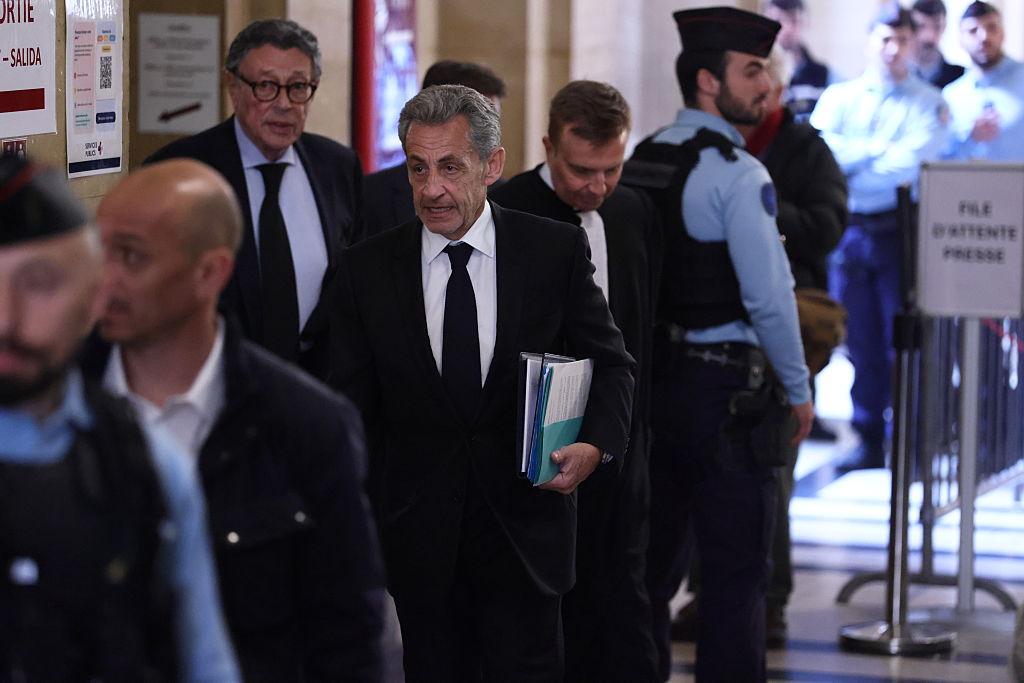
Closing arguments concluded in Paris on Wednesday in the appeal trial of former French President Nicolas Sarkozy on charges of receiving illegal Libyan financing for his 2007 presidential campaign. Standing before the court for what may be his final statement in this decade-long legal battle, Sarkozy insisted he had “not betrayed the trust of the French people” and that “not one cent” of Libyan money had entered his campaign. Prosecutors responded with an unambiguous demand: seven years in prison, a €300,000 fine, and a five-year ban from public office. The court is expected to deliver its ruling on November 30, 2026.
Background
The case rests on an accusation that strikes at the foundation of democratic legitimacy: that Muammar Gaddafi’s regime financed Sarkozy’s path to the Élysée Palace in exchange for political concessions — chief among them rehabilitating Libya’s international standing, reintegrating it into the Western order, and intervening in the case of Abdullah Senussi, Gaddafi’s intelligence chief, who had been sentenced in France to life imprisonment for his role in the 1989 bombing of a UTA airliner over Niger that killed 170 people.
In September 2025, a Paris court convicted Sarkozy of criminal conspiracy related to seeking Libyan funds, while acquitting him of the more serious charges: passive corruption, illegal campaign financing, and concealing the embezzlement of Libyan public funds. He was sentenced to five years in prison and became the first former French president in modern history to actually enter a cell — serving 20 days at La Santé prison before being released under judicial supervision pending appeal.
The partial conviction satisfied no one. Sarkozy appealed to overturn it entirely. Prosecutors appealed to expand it, demanding the court restore every charge that had previously fallen away. This appeal is therefore not a routine sentencing review. It is a full-scale legal reckoning over the true nature of what occurred: was this a vague conspiracy with no traceable funds, or a structured corruption pact between a French presidential campaign and a Libyan dictatorship?
Causes and Drivers
First — The first-instance verdict opened the door for both sides. The September 2025 conviction for criminal conspiracy, without establishing that Libyan money physically reached campaign accounts, created legal space for the defense to challenge the conviction and for prosecutors to broaden it.
Second — The symbolic weight of actual imprisonment. Sarkozy’s entry into prison — even for just 20 days — transformed the appeal from a legal procedure into a full political and media battle, raising the stakes for both sides far beyond what the original sentencing implied.
Third — A complex web of intermediaries and interests. Prosecutors do not view this as a case of “money that couldn’t be traced.” They see a structured network of meetings, communications, intermediaries, and interlocking interests between Sarkozy’s inner circle and Libyan officials — what they describe as a “corruption pact,” even where direct proof of money movement remains contested.
Fourth — Fractures within Sarkozy’s own camp. The most damaging development of the appeal came not from prosecutors but from inside the former president’s circle. Claude Guéant, his former chief of staff and one of nine co-defendants, was absent from the closing sessions due to illness — but his lawyers submitted written statements explicitly accusing Sarkozy of attempting to shift blame onto Guéant in his absence. Those statements indicated that Guéant had acted throughout on Sarkozy’s direct instructions, a claim that significantly undermines the former president’s narrative of distance and deniability.
Implications and Why This Case Matters
Democratic legitimacy. If the prosecution’s case is proven, France did not merely experience a campaign finance violation. It experienced a regime with a documented record of state-sponsored terrorism purchasing access to the presidency of a founding NATO member — which is precisely why prosecutors have described it as among the gravest crimes the Republic has ever faced.
Judicial accountability. The case tests whether the French judiciary can hold a former head of state accountable in a matter involving alleged foreign financing, nearly two decades after the events in question, and in the face of formidable evidentiary challenges. The outcome will say as much about the health of French institutions as it does about Sarkozy himself.
France’s unresolved relationship with Gaddafi’s Libya. The trial reopens a deeply sensitive chapter: the diplomatic rehabilitation of Libya, the arms deals, the controversial 2007 state visit to Paris — all of which followed Sarkozy’s election. For the families of the 170 victims of the UTA bombing, this case has never been abstract.
The American dimension. Washington is watching as a strategic partner, not a bystander. If it is judicially established that Gaddafi’s regime successfully financed the presidential campaign of a NATO ally, the implications extend across every file the United States monitors in the Mediterranean and North Africa: irregular migration, arms trafficking, Russian entrenchment in Libya and the Sahel, and the vulnerability of Western democratic institutions to foreign financial penetration. The deeper American question is not whether this happened in France — it is where else it may have happened, and whether it was ever detected.
Assessment and Expected Scenarios
Four scenarios are now in play ahead of the November 30 ruling:
Scenario One — Partial affirmation. The court upholds the criminal conspiracy conviction with a sentence close to the original five years. A limited victory for prosecutors that leaves the most serious charges unresolved and the deeper questions unanswered.
Scenario Two — Full escalation. The court convicts Sarkozy on all charges: seven years in prison, €300,000 fine, five-year ban from public life. This is the prosecution’s target — and if realized, it would stand as the most consequential verdict in the history of the French Fifth Republic.
Scenario Three — Reduction or acquittal. The court finds insufficient evidence that Libyan funds reached the campaign, reduces the sentence, or overturns the conviction altogether. A historic reprieve for Sarkozy and a serious blow to the credibility of the entire investigation.
Scenario Four — An open-ended legal battle. Regardless of the November 30 ruling, Sarkozy retains the right to appeal to France’s Court of Cassation, the country’s highest judicial authority. The case may remain legally and politically unresolved well into 2027 and beyond — keeping one of Europe’s most consequential corruption trials alive long after its supposed final act.
Ruling expected: November 30, 2026 — Paris Court of Appeal