
The News
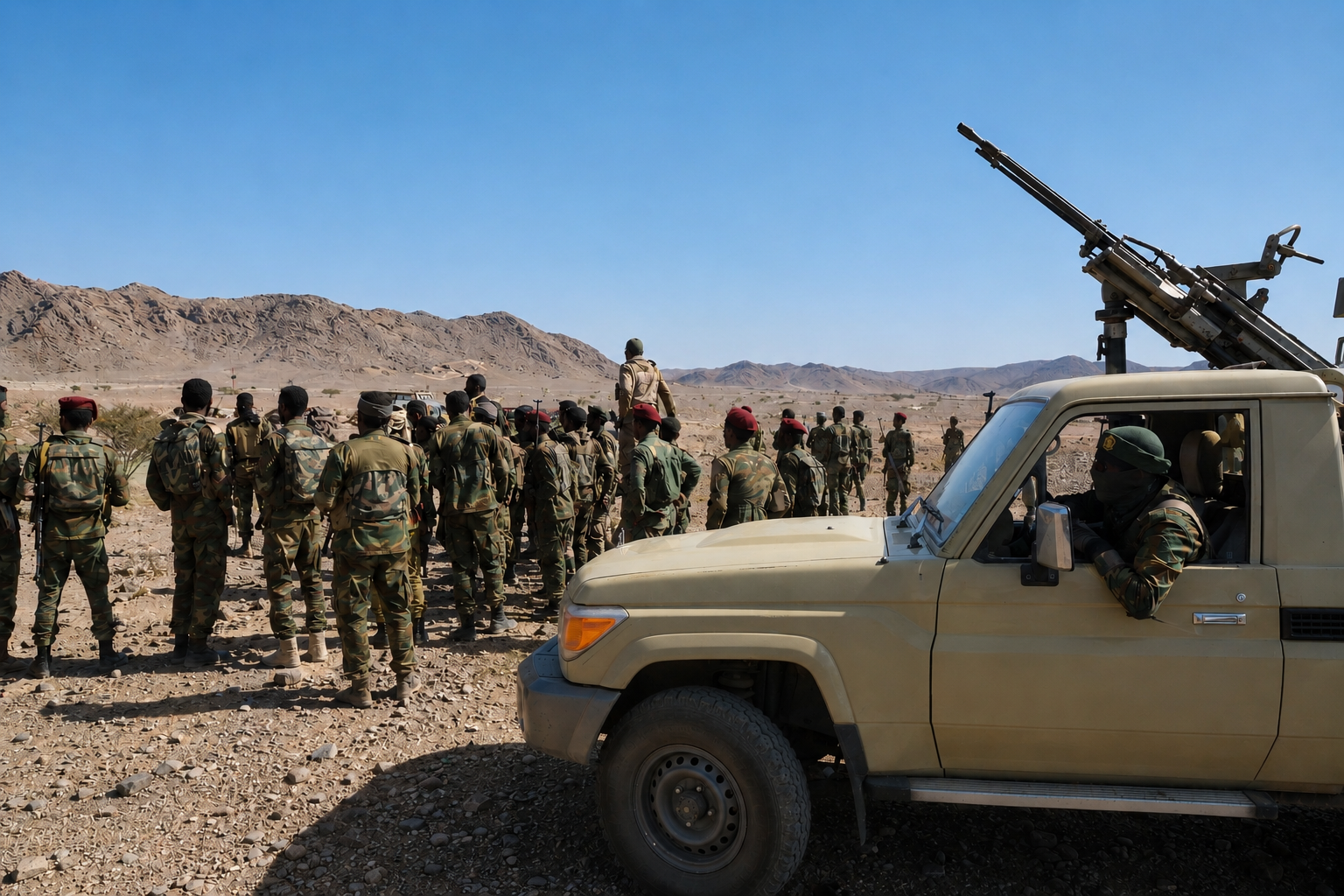
Mounting evidence indicates that Eritrea is overseeing the training and arming of more than eight armed Sudanese factions on its territory and along the border strip. Forces of the “National Movement for Justice and Development,” led by Mohamed Taher Beitai, have returned from Asmara and begun establishing training camps in the Hamshkorib area of Kassala state. Against this backdrop, the Anti-Smuggling Directorate in Red Sea State intercepted an attempted shipment of more than 147,000 rounds of ammunition in what has been described as one of the largest seizures of its kind in recent months.
Why This Matters to America
This development directly touches three core American interests:
First — Red Sea Security: Eastern Sudan’s states (Red Sea, Kassala, Gedaref) form the backbone of Sudan’s port infrastructure and regional supply corridors. Any armed destabilization threatens navigation through a maritime artery Washington is committed to protecting as part of its Horn of Africa strategy — particularly in the wake of Houthi disruptions in the Gulf of Aden.
Second — Horn of Africa Security Architecture: The rise of Eritrean influence inside Sudan through proxy militias is reshaping the regional balance of power in an area where Moscow, Beijing, and Tehran are actively competing for influence — raising the strategic cost of continued American disengagement.
Third — Diplomatic Leverage: The emerging crisis offers Washington an opening to deepen intelligence cooperation with neighboring states, engage in mediation efforts, and expand humanitarian support — all of which reinforce American political and diplomatic presence in Sudan and the broader Horn.
Implications
- For the Sudanese conflict: Eritrea’s expanding footprint is drawing the outline of a potential third front in the east, adding to the war already raging between the Sudanese Armed Forces and the Rapid Support Forces — and undermining any prospect for a ceasefire or political settlement.
- For social cohesion: The militarization of ethnic and tribal communities in eastern Sudan is fueling hate speech and threatens to ignite new intra-communal conflicts that go beyond the main warring parties.
- For the economy and supply chains: Threats to Sudan’s ports and regional supply routes directly impact the flow of humanitarian aid and ripple across Horn of Africa markets.
- For state authority: The spread of externally-backed armed groups outside government control grants these factions independent operational capacity, weakening centralized decision-making and complicating any future peace negotiations.
Assessment
Eastern Sudan is entering a dangerous period of strategic realignment. The security threats it now faces are no longer merely an extension of the SAF-RSF war — they have acquired a structural character of their own, driven by two inseparable forces: the erosion of state authority on the ground, and Eritrea’s deliberate effort to build a network of loyal proxies along its border with Sudan.
The real danger lies not in the existence of armed groups per se — Sudan has long lived with that reality — but in the fact that these groups are being built according to a clear strategic logic: either to create a pro-Asmara security buffer deep inside Sudanese territory, or to secure Eritrea a seat at any future negotiating table through battlefield facts rather than diplomacy. Eritrea’s moves, in other words, are not a defensive reaction to Sudanese chaos — they are a forward investment in the post-war order.
From an American perspective, this is a genuine test of Washington’s seriousness in managing the Sudan file as part of the broader Horn of Africa picture. The region is being redrawn: the nascent Ethiopian-Eritrean rapprochement, Russian and Chinese efforts to fill the vacuum in the Sahel and Horn, and intensifying competition over Red Sea ports — all of these make eastern Sudan a pressure point that Washington cannot afford to ignore without significant strategic cost.
The most likely near-term trajectory is one of contained escalation: rising fragility without full breakdown, but with pressures accumulating steadily toward the threshold of regional explosion — unless the Eritrean factor is addressed, diplomatically and on the ground.